Key Takeaways
Covers call center routes in depth
Covers cc routes voip in depth
Covers cli vs non-cli routes in depth
Covers wholesale voip routes in depth
Explore MeraTalk's Wholesale VoIP solutions — built for carriers, resellers, and enterprises.
Learn moreWhat Are CC Routes in Wholesale VoIP?
CC routes are a class of wholesale VoIP termination built for high-volume, cost-sensitive call center traffic. The letters stand for Call Center, and the name describes the job: carry large batches of outbound minutes to a destination as cheaply as the network will allow. Some carriers also read CC as Calling Card, because the same route type once powered prepaid calling-card platforms.
Either way, the engineering priority is the same — move the most minutes at the lowest possible rate per minute.
Every wholesale voice carrier sorts its termination into route classes so buyers can match a route to the value of the traffic on it. CC routes sit at the volume-first end of that spectrum. They are the routes a dialer reaches for when the campaign is measured in millions of attempts and the caller ID on each call matters less than the price.
Understanding where CC routes fit — and where they do not — is the difference between a profitable calling operation and one that quietly burns money on connected calls nobody answers.
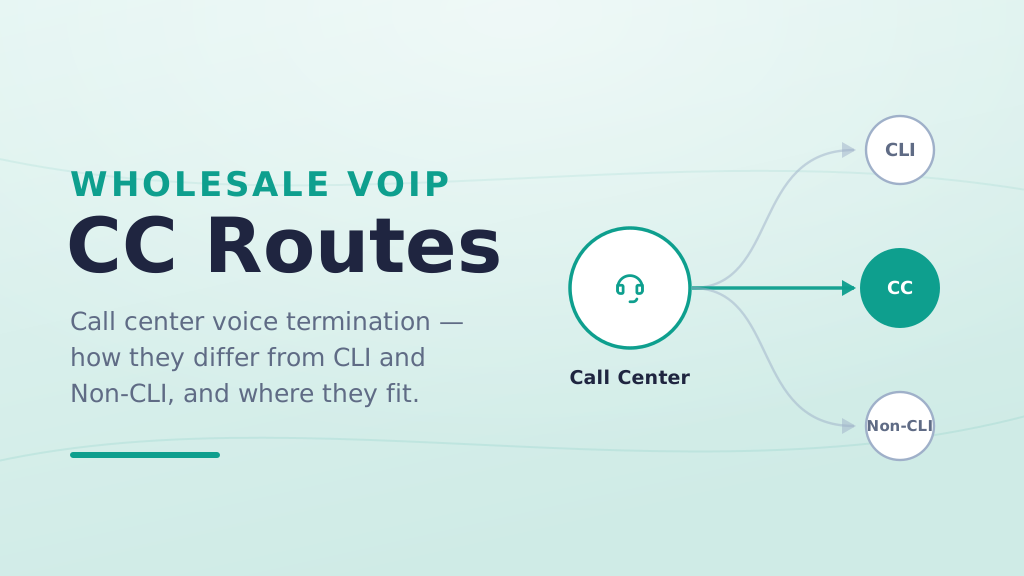
CLI vs Non-CLI vs CC Routes
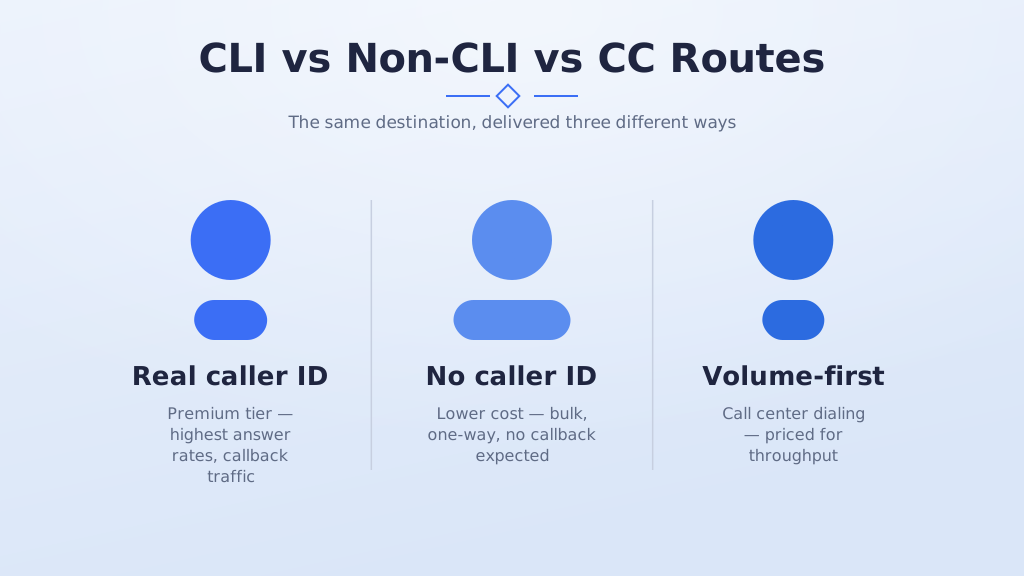
Wholesale termination is usually split into three classes. The split is not about the destination — it is about how the call is delivered and what happens to the caller's number along the way.
CLI Routes
CLI (Caller Line Identification) routes pass the caller's number through to the destination network unaltered. The person being called sees a real, dialable number. CLI routes are the premium tier: they cost more per minute, but they earn higher answer rates because recipients trust a call that shows a genuine caller ID. Sales teams, appointment reminders, and any campaign that needs a callback all depend on CLI.
Non-CLI Routes
Non-CLI routes drop or replace the caller ID on the way to the destination. The recipient sees no number, an unfamiliar one, or a generic string. These routes cost less and suit traffic where a callback is not expected — bulk notifications, one-way voice broadcasts, and internal test dialing.
CC Routes
CC routes are the volume-optimized cousin of Non-CLI. They are tuned for continuous, high-attempt call center dialing where the operation cares first about the per-minute rate and the raw ability to complete a connection. Caller ID handling on a CC route is inconsistent by design — the route is priced for throughput, not presentation. A good wholesale voice carrier labels each route class clearly so buyers are never surprised by how their number arrives.
How CC Routes Carry a Call
A call on a CC route follows the same physical path as any other wholesale call, but the route is chosen for cost. The traffic leaves the dialer, enters the originating carrier, and is handed to whichever transit partner offers the lowest workable rate to that destination. That partner passes it to the terminating carrier, which delivers it to the recipient's network.
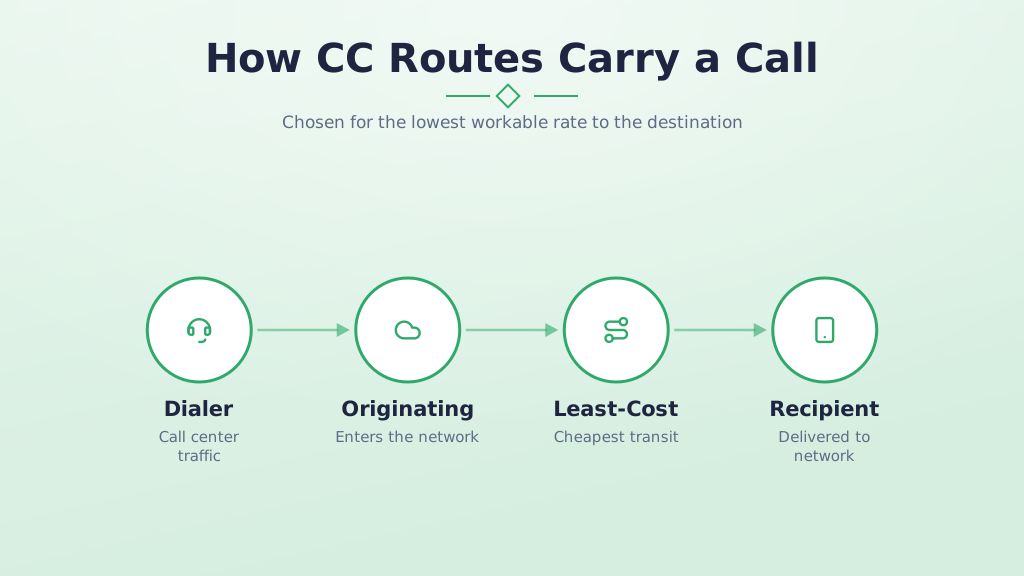
Because CC routes optimize for price, they often travel through more intermediate hops than a premium CLI route. Each hop is a commercial decision made by least-cost routing tables in milliseconds. The upside is a very low rate. The trade-off is that added hops can raise post-dial delay and, on the weakest routes, degrade audio.
This is why serious operators pair CC volume with real-time monitoring rather than trusting a rate sheet alone. Buyers who want the mechanics of the full delivery chain can read our guide to wholesale VoIP termination for a step-by-step walkthrough.
Get Wholesale VoIP rates with transparent wholesale pricing.
Where CC Routes Fit Best
CC routes are a specialist tool, not a default. They shine when the traffic is high in volume, tolerant of variable caller ID, and measured on cost per completed minute rather than on trust signals. The clearest fits are below.
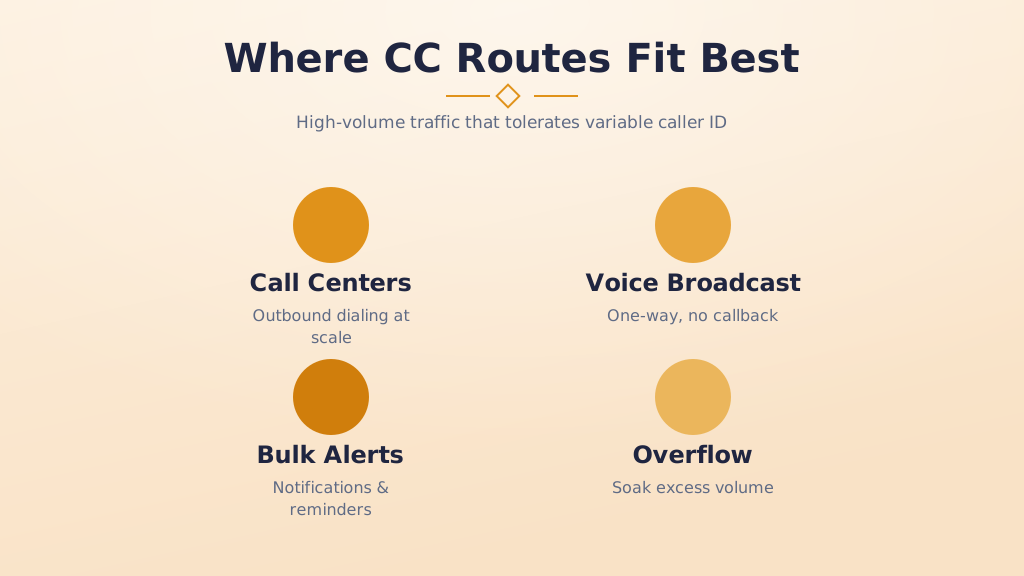
- Outbound call center campaigns — continuous dialing where the metric is cost per connected minute.
- Voice broadcasting — one-way messages that never expect a callback.
- Bulk notifications and reminders — high-count alerts where presentation is secondary.
- Test and overflow traffic — soaking excess volume that does not justify premium CLI rates.
The mirror image is just as important. Any campaign that needs a customer to call back, any regulated outreach that must show a valid caller ID, and any brand-sensitive traffic belongs on CLI, not CC. Choosing CC for that work saves pennies on termination and loses far more on unanswered calls.
How to Judge CC Route Quality
Two CC routes to the same country can carry an identical rate and behave nothing alike. The rate is only the headline. Quality lives in a handful of statistical measures that a wholesale carrier should report route by route.

- Answer-Seizure Ratio (ASR) — the share of attempts that connect. On CC routes this typically runs lower than CLI, so watch for sudden drops that signal a broken downstream leg.
- Average Call Duration (ACD) — very short average calls across a route often mean poor audio driving early hang-ups, not genuine conversations.
- Post-Dial Delay (PDD) — the pause between dialing and first ring. Long PDD points to too many transit hops or an overloaded node.
- FAS-free billing — a guarantee that the route only charges after a real human answer, never on false answer supervision.
The single most useful question to ask a provider is which thresholds trigger automatic rerouting. A carrier that reroutes when ASR or ACD breaks a set point is engineering quality; one that only quotes a rate is selling a number. Cheap minutes on a route that never connects are the most expensive minutes a call center can buy.
Balancing CC and CLI Routes
The strongest calling operations rarely run on a single route class. They blend routes by campaign. High-value, callback-driven outreach rides CLI, where a genuine caller ID lifts answer rates. High-volume, presentation-agnostic dialing rides CC, where the low rate compounds across millions of attempts. The blend is a business decision that a good provider helps tune with live quality data.
Caller identity is what technically separates the two. On modern VoIP, the caller's number is carried in SIP signaling, and the P-Asserted-Identity header is the field that lets trusted networks assert a verified caller ID between them.
CLI routes preserve that trusted identity end to end; CC routes often do not, which is exactly why they are cheaper and why they suit only the traffic that does not depend on it. Knowing which header carries identity — and whether a route protects it — is the line between a route that lands calls and one that merely completes them.
Avoiding FAS and Route Fraud on CC Traffic
Because CC routes chase the lowest rate, they attract the most billing games. The classic one is False Answer Supervision (FAS): the route signals a call as answered before a human actually picks up, so the buyer is billed for silence or a fake ringing tone. Across a high-volume campaign, FAS can quietly inflate a bill while wrecking the apparent ASR.
The defenses are practical. Insist on FAS-free routes in writing. Reconcile your own call detail records against the carrier's invoices, not the other way around. Watch for routes with suspiciously high ASR paired with very low ACD — a common fingerprint of false answers. And favor carriers that own or directly monitor their routes rather than reselling anonymous capacity three hops deep.
On CC traffic, a slightly higher rate from a monitored route almost always beats a rock-bottom rate from a route you cannot see into.
CC Routes at MeraTalk
MeraTalk runs wholesale termination across clearly labeled route classes, so a buyer always knows whether traffic is riding CLI, Non-CLI, or CC before a single minute flows. CC volume is carried on monitored, FAS-free routes with least-cost routing balanced against live ASR, ACD, and PDD thresholds — the difference between minutes that connect and minutes that only bill.
For a call center, the right answer is rarely all CC or all CLI. It is a deliberate blend, tuned to each campaign and watched in real time. That is the model MeraTalk is built around: wholesale-grade routing, transparent route classes, and the monitoring that keeps cheap minutes from turning expensive.
Ready to get started with CC routes?
Join thousands of businesses using MeraTalk for Wholesale Voice, VoIP, and phone number services.
Contact MeraTalk Today