Key Takeaways
Covers Wholesale Voice solutions in depth
Covers Wholesale Voice services in depth
Covers bulk voice services in depth
Covers voice wholesale in depth
Explore MeraTalk's Wholesale Voice solutions — built for carriers, resellers, and enterprises.
Learn moreWhat Is Wholesale Voice?
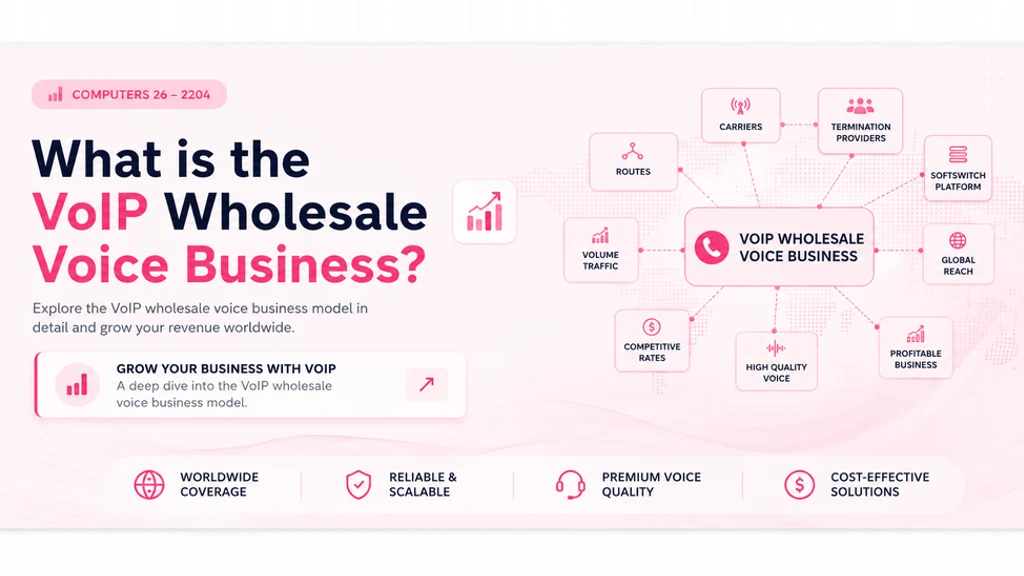
Wholesale Voice is the bulk purchase and resale of voice communication services between telecommunications companies, carriers, and service providers. It is a business-to-business model operating at the infrastructure layer of global telephony — the commercial and technical foundation that makes it possible for billions of phone calls to connect every day.
Unlike retail voice services sold directly to individuals and businesses with monthly plans, Wholesale Voice involves carrier-to-carrier or carrier-to-reseller transactions priced per minute by destination. The buyers in Wholesale Voice markets are themselves in the business of delivering communications — they use Wholesale Voice as the raw material to build their own telephony products and services.
Key Terminology
- Voice traffic — the volume of calls flowing across a network, measured in minutes.
- Termination — the delivery of an outbound call to its final destination on another network.
- Origination — the receipt of an inbound call from the PSTN or another network.
- SIP trunking — the protocol-based method for connecting VoIP systems to carrier networks.
How Wholesale Voice Services Work
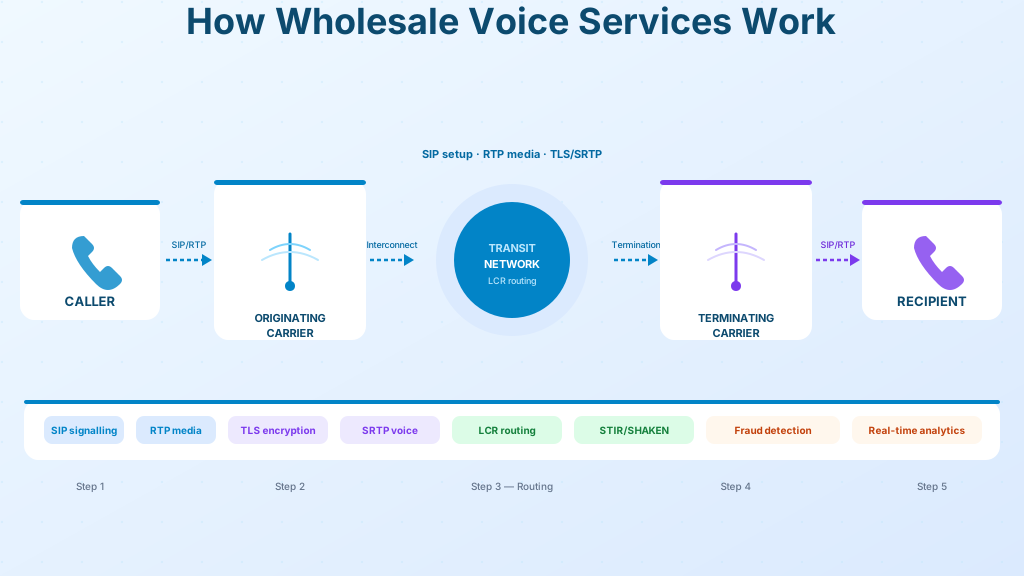
Wholesale Voice services operate through a routing chain. When a call is placed, it travels from the caller's device through their carrier to a transit network, which routes it toward the destination through interconnection agreements. Each segment of this chain is governed by wholesale commercial arrangements between carriers.
VoIP and SIP in Wholesale Voice
Modern Wholesale Voice is predominantly delivered over VoIP (Voice over Internet Protocol) using SIP (Session Initiation Protocol). SIP manages call setup and teardown; the actual voice data travels over RTP (Real-Time Transport Protocol). SIP trunks connect carrier networks to each other and to business VoIP platforms.
Call Routing and Termination
Call routing directs each call through the available paths to its destination, optimising for cost, quality, or both depending on the routing policy. Termination is the final leg — the delivery of the call to the recipient's network and device. Transit carriers charge termination fees for this service, forming the basis of Wholesale Voice pricing.
Who Uses Wholesale Voice and Why
Wholesale Voice is not only for the largest telecoms companies. Several kinds of organisation buy at the wholesale layer.
Retail Carriers and MVNOs
Mobile virtual network operators and regional retail carriers buy Wholesale Voice capacity from larger networks and resell it under their own brand, which lets smaller operators offer national or international calling without owning the physical network.
UCaaS and Cloud Phone Providers
Cloud phone platforms such as MeraTalk sit on top of wholesale infrastructure. Rather than building carrier networks, they agree termination terms with several carriers and route customer calls through the best available path for each destination.
Contact Centers at Scale
High-volume contact centers often negotiate wholesale arrangements directly to control per-minute costs, because at millions of outbound minutes a month the gap between wholesale and retail minutes becomes a major line item.
Enterprises With International Operations
Multinational businesses sometimes set up wholesale relationships to manage the cost and quality of calling between offices, particularly in industries such as financial services, legal and logistics where cross-border voice is high volume and high value.
Get Wholesale Voice termination with transparent wholesale pricing.
How the Wholesale Voice Routing Chain Works
A single call can pass through several carrier networks between the caller and the recipient.
- 1The originating carrier receives the call from the caller's device and converts it to SIP if it is not already.
- 2The call is passed to a transit carrier, often a Tier 1 network operator with peering agreements across many destination networks.
- 3The transit carrier routes the call toward the terminating carrier using least-cost routing and quality-of-service rules.
- 4The terminating carrier delivers the call to the destination number.
Each handoff is a wholesale commercial relationship, typically a bilateral agreement or a published rate card, and the per-minute rates in those agreements set the economics of the whole market.
Least-Cost Routing (LCR)
Most carriers use least-cost routing, where an automated system selects the cheapest available route for each destination at the moment the call is placed, subject to minimum quality thresholds. LCR is why rates vary by destination and time of day, and why the same call can take different paths on consecutive attempts.
Tier 1, Tier 2 and Tier 3 Carriers: What the Difference Means
The wholesale market is organised around carrier tiers that reflect how much physical network each carrier owns.
- Tier 1 carriers own the physical backbone, such as undersea cables, intercontinental fibre and national switching, and peer directly with other Tier 1 carriers.
- Tier 2 carriers own regional infrastructure and buy some transit from Tier 1 networks, balancing owned capacity with purchased capacity to reach near-global coverage.
- Tier 3 carriers own little or no physical infrastructure and resell capacity bought from Tier 1 or Tier 2 carriers, often serving specific geographies or segments.
The tier of the underlying relationships affects call quality and reliability. Providers that route mainly through Tier 1 networks tend to deliver more consistent quality, while those that chase the lowest cost through Tier 3 carriers can see more jitter, latency and failed calls on some destinations. For the carrier-selection side of this, see our guide to choosing a wholesale voice carrier.
Benefits of Wholesale Voice for Businesses
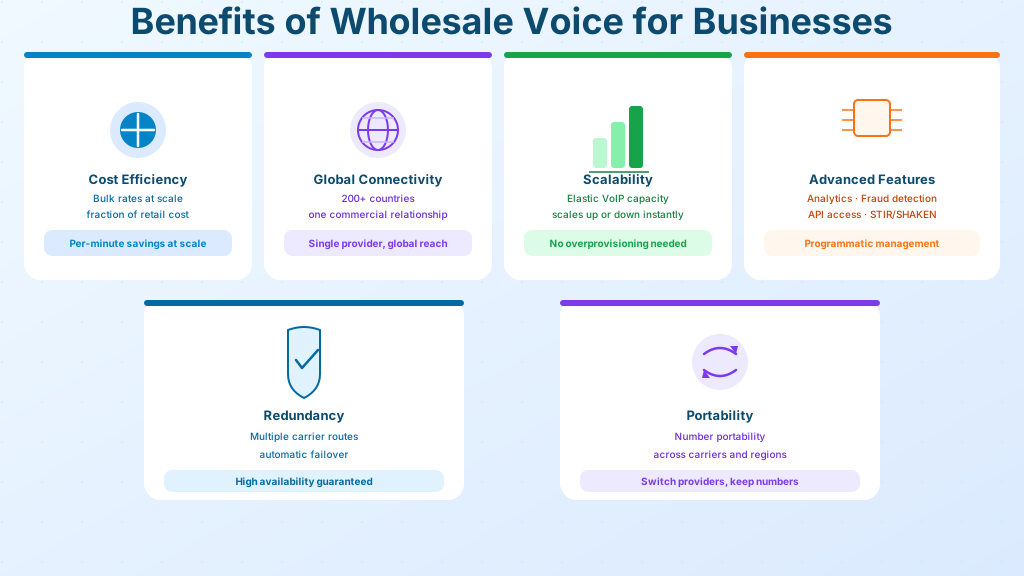
Cost Efficiency at Scale
Wholesale Voice pricing reflects economies of scale. Businesses and platforms that commit to high call volumes access per-minute rates that are a fraction of retail telephony costs. For contact centers, BPO operations, and UCaaS platforms, the per-minute savings across millions of monthly call minutes are transformational.
Global Connectivity
Wholesale Voice providers offer coverage across 200+ countries through a single commercial relationship. This global reach eliminates the need for separate carrier agreements in each country where a business needs to make or receive calls.
Scalability
Wholesale Voice services scale elastically with call volume. Unlike physical telephone infrastructure, Wholesale VoIP capacity can be increased or reduced almost immediately, matching fluctuating demand without overprovisioning.
Advanced Features
Modern Wholesale Voice platforms include real-time call analytics, fraud detection, number management, STIR/SHAKEN attestation, and API access for programmatic management. These capabilities enable sophisticated communications applications beyond simple call routing.
Wholesale Voice Pricing Explained
Wholesale Voice pricing is per-minute and per-destination. Major pricing models include:
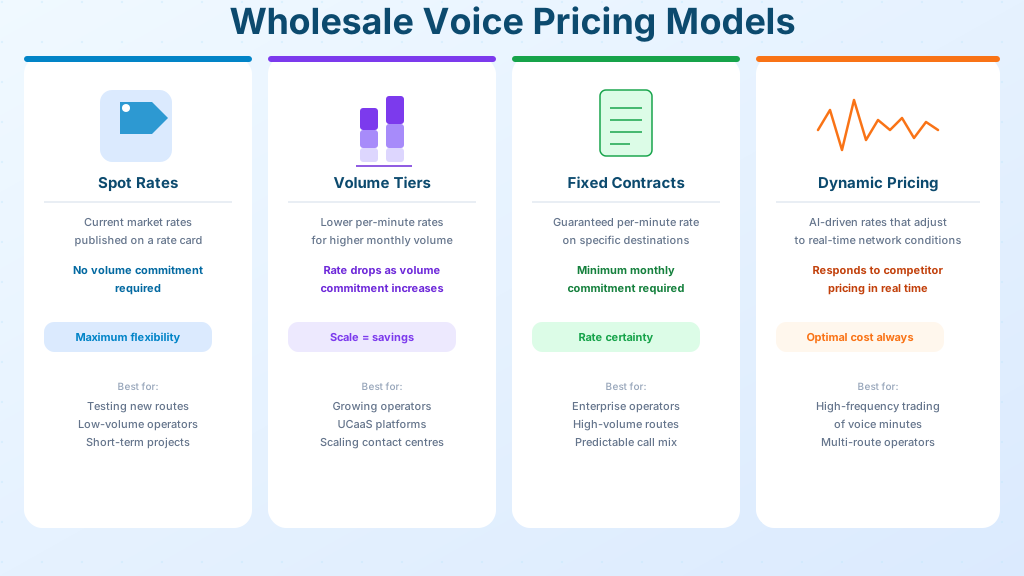
- Spot rates — current market rates published on a rate card, no volume commitment required.
- Volume tiers — lower per-minute rates for higher monthly minute commitments.
- Fixed contracts — guaranteed per-minute rates on specific destinations in exchange for minimum monthly commitments.
- Dynamic pricing — AI-driven rates that adjust based on real-time network conditions and competitor pricing.
Billing increments significantly affect total cost. Per-second billing is standard among enterprise providers; providers billing in six-second or full-minute increments charge materially more per call when averaged across a call mix with many short calls.
Security and Compliance in Wholesale Voice
Security in Wholesale Voice covers both the protection of communication data and the prevention of financial fraud. Key requirements for Wholesale Voice providers include:
- TLS encryption for SIP signalling.
- SRTP encryption for voice media.
- IP-based authentication for SIP account access.
- Real-time IRSF fraud detection with automatic blocking.
- STIR/SHAKEN attestation for US outbound calls.
- Compliance with applicable telecommunications regulations in each operating jurisdiction.
How to Choose a Wholesale Voice Provider
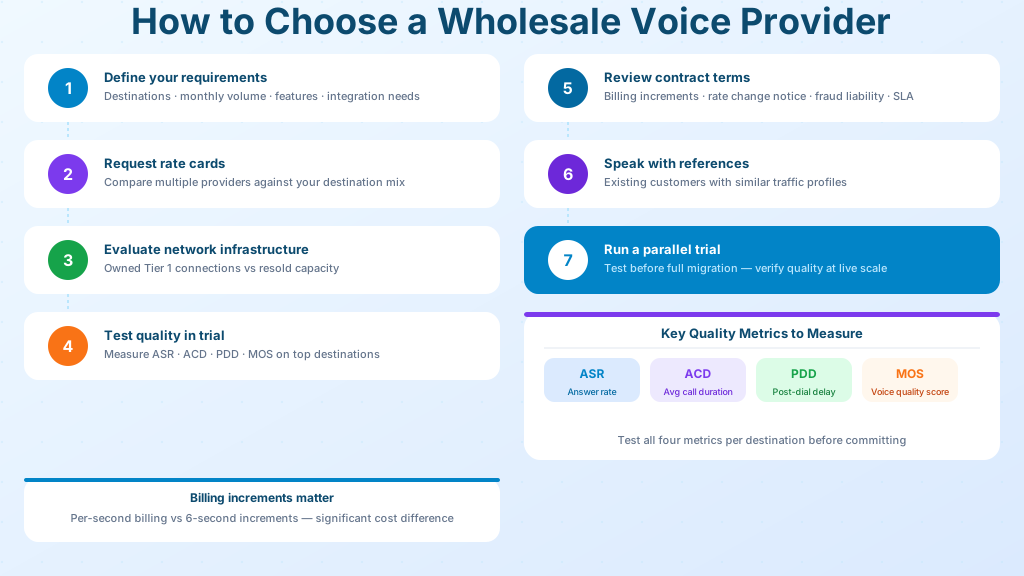
- 1Define your requirements — destinations, monthly volume, required features, integration needs.
- 2Request rate cards from multiple providers and compare against your destination mix.
- 3Evaluate network infrastructure — owned Tier 1 connections versus resold capacity.
- 4Test quality in trial — measure ASR, ACD, PDD, and MOS on your top destinations.
- 5Review contract terms — billing increments, rate change notice, fraud liability, SLA.
- 6Speak with references — existing customers with similar profiles.
- 7Run a parallel trial before full migration.
MeraTalk provides Wholesale Voice services with direct carrier relationships, transparent pricing, and enterprise-grade reliability. Contact the MeraTalk wholesale team to discuss your requirements and receive a customised rate comparison.
Glossary: Key Terms in Carrier Interconnection
The wholesale layer of telephony has its own vocabulary. These terms appear most often in carrier agreements, rate cards and quality reports. For more, see SIP trunks.
- Rate card — a published list of per-minute prices for each destination a carrier can reach, usually updated on a notice cycle.
- Bilateral agreement — a two-way commercial arrangement in which two carriers exchange traffic, often with negotiated rates in both directions.
- Interconnect — the technical and commercial link between two carrier networks over which calls are handed off.
- CDR (Call Detail Record) — the per-call log used for billing, dispute resolution and quality analysis.
- PoP (Point of Presence) — a physical location where a carrier accepts traffic; more PoPs generally mean lower latency for nearby customers.
Planning a Migration to a New Voice Provider
Switching wholesale providers is rarely a single cutover event. Because live call traffic is involved, the safest migrations run old and new routes in parallel and shift traffic gradually as confidence builds.
- 1Inventory current traffic — pull recent CDRs and identify your top destinations, peak concurrent call counts, and average call durations.
- 2Establish the new interconnect early — complete SIP trunk configuration, codec agreement, and test calls before any production traffic moves.
- 3Shift a small slice first — route a limited destination or a fixed share of traffic through the new provider and compare quality metrics side by side.
- 4Keep the old route as failover — retain the previous relationship through at least one full billing cycle so traffic can revert instantly if problems appear.
- 5Reconcile the first invoices — verify billed minutes against your own CDRs before scaling volume commitments.
A staged approach converts an all-or-nothing risk into a controlled experiment with a clear rollback path at every step.
Common Implementation Pitfalls and How to Avoid Them
Most problems with bulk voice services surface in the first weeks of an implementation, and nearly all of them are preventable with preparation.
- Codec mismatches — confirm which codecs both sides support before go-live; transcoding mid-path degrades audio and adds latency.
- Undersized trunks — provision for peak concurrent calls, not average volume, or busy-hour traffic will hit capacity limits and fail.
- Ignoring billing increments — a low headline rate billed in full-minute increments can cost more than a higher rate billed per second.
- Skipping failover tests — redundancy that has never been exercised often fails exactly when it is needed; schedule deliberate failover drills.
- Unregistered caller ID — outbound numbers without proper attestation and CNAM registration get flagged as spam by destination carriers.
Building a pre-launch checklist from these items — and walking through it with the provider's onboarding team — avoids the most expensive early surprises.
Monitoring Quality After Go-Live
Signing a strong provider is only the beginning; route quality changes over time as underlying carrier networks shift. Ongoing monitoring is what keeps a good deployment good.
The metrics worth tracking continuously are answer-seizure ratio (the share of attempts that connect), average call duration (sudden drops often signal audio problems causing hangups), post-dial delay (how long callers wait for ringback), and mean opinion score (a standardised audio quality measure). Most enterprise platforms expose these per destination in a dashboard; the discipline is reviewing them on a schedule rather than only after complaints arrive.
Set baseline values during the first month, then alert on deviations rather than absolute numbers. A destination whose connect rate drifts steadily downward is telling you a route has degraded — raising it with the provider early, backed by data, gets faster resolution than an anecdotal complaint.
Trends Reshaping the Carrier Market
The bulk voice market is consolidating and modernising at the same time. Carrier numbers are shrinking as larger networks absorb regional players, while the technology stack is being rebuilt around software-defined routing and programmable interfaces.
Several shifts matter most for buyers. AI-driven routing engines now adjust route selection in near real time based on measured quality, not just price. Authentication frameworks such as STIR/SHAKEN are spreading beyond the US, making verified caller identity a global expectation rather than a regional rule. API-first provisioning is replacing email-and-spreadsheet workflows for number management and capacity changes. And the line between voice and messaging continues to blur, with providers bundling SMS and voice capacity under unified commercial agreements.
For businesses, the practical takeaway is to favour partners investing in these directions — a provider modernising its platform today is less likely to become a migration project tomorrow.
Ready to get started with Wholesale Voice?
Join thousands of businesses using MeraTalk for Wholesale Voice, VoIP, and phone number services.
Contact MeraTalk Today