Introduction
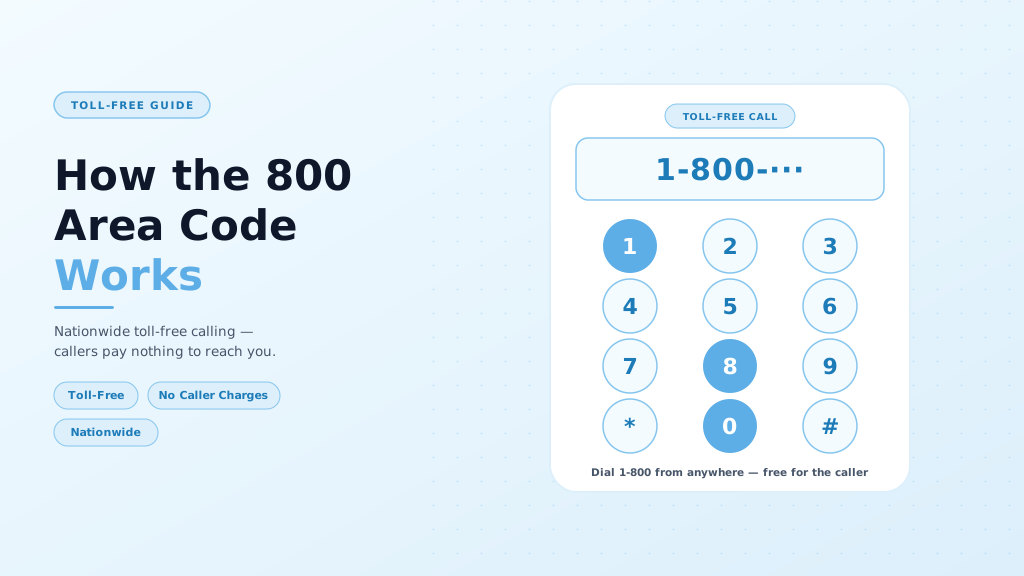
The 800 area code is one of the original toll-free numbers in the North American Numbering Plan (NANP). It lets businesses connect with customers across the US and Canada at no cost to the caller. Introduced in 1963, it has been a key tool for improving customer service and building a professional presence. Its non-geographic nature and portability have made it a go-to choice for businesses that want easy, free access for their customers.
Key Takeaways
Covers 800 toll-free number in depth
Covers 800 area number in depth
Covers toll-free prefix in depth
Covers how does 800 number work in depth
Need a business phone number? Get a MeraTalk number in minutes, no contract required.
Get started freeWhat is 800 Area Code?
The area code 800 is a toll-free number prefix in the North American Numbering Plan (NANP). Callers can reach businesses without paying long-distance charges. Introduced in 1963, it was the first toll-free area code. It changed how businesses communicate with customers — making it easy for anyone to call without worrying about cost.
The 800 area code is non-geographic and portable. Unlike regular area codes tied to a city or state, 800 numbers work across the United States and Canada. Companies can also move their 800 numbers between providers. This flexibility makes 800 numbers a strong tool for businesses that want a national presence.
When a caller dials an 800 number, the call travels through the Public Switched Telephone Network (PSTN) to the business's chosen provider. The provider then connects it to the right phone line. Using an 800 number helps businesses serve customers, drive sales, and reach a national audience. Today, 800 numbers remain a standard in business communication.
How Does the 800 Area Code Work?
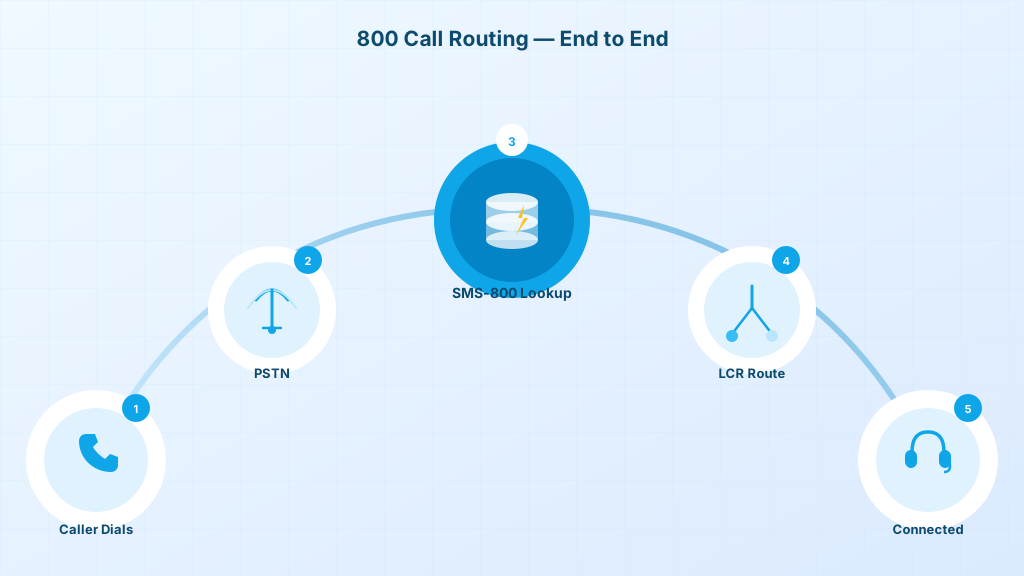
When a caller dials an 800 number, the call travels through the Public Switched Telephone Network (PSTN) — a network of telephone lines and switches. The PSTN sends the call to the business's chosen provider, which then connects it to the right phone line. Three key players make this work:
Key Players in 800 Call Routing
- Responsible Organization (RespOrg): Manages the 800 number database.
- Local Exchange Carrier (LEC): Connects the caller to the PSTN.
- Interexchange Carrier (IXC): Routes the call to the business's provider.
Call Routing Process:
Here's a step-by-step breakdown of how area code 800 calls are routed:
- 1Dialing: Caller dials the 800 number.
- 2LEC: Local Exchange Carrier connects caller to PSTN.
- 3RespOrg: Responsible Organization verifies 800 number.
- 4IXC: Interexchange Carrier routes call to business's provider.
- 5Provider: Connects call to business's designated phone line.
Key Points:
- Toll-free calling: Callers don't incur long-distance charges.
- National accessibility: 800 numbers are accessible from anywhere.
- Non-geographic: 800 numbers aren't tied to specific locations.
- Portable: Businesses can transfer 800 numbers between providers.
- Automated routing: Calls are routed efficiently through the PSTN.
Features of 800 Area Code
800 toll-free numbers offer a wide range of features that improve business communication. They provide a cost-effective solution for customer service, sales, and support.
Key Advantages
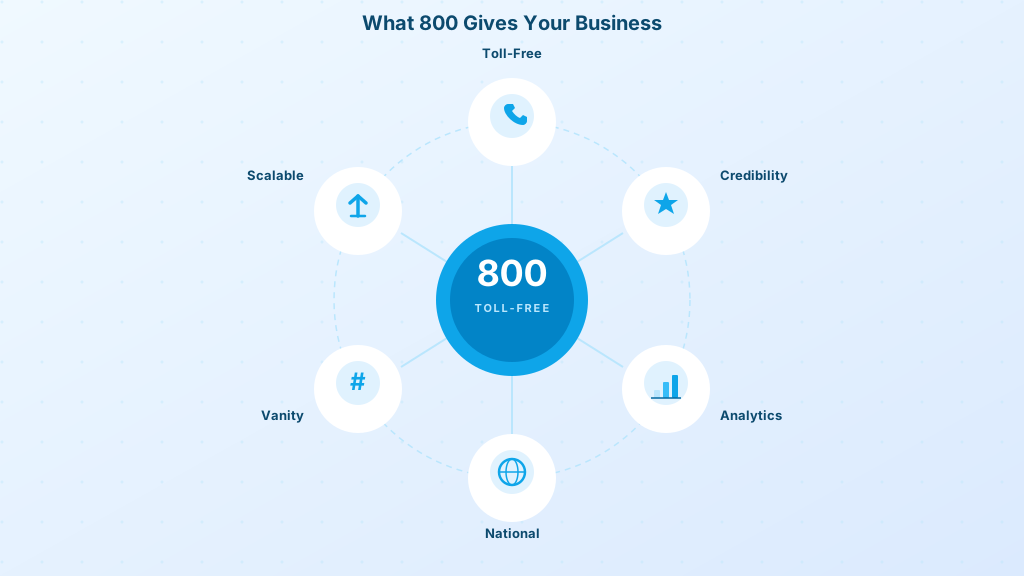
These numbers give businesses several clear advantages:
- Toll-Free Calling: Customers can contact businesses without incurring long-distance charges, encouraging them to reach out with questions or concerns.
- National Accessibility: Reach customers across the US and Canada, expanding your business's geographic reach.
- Non-Geographic: Operate seamlessly across different regions, without being tied to a specific location.
- Portable: Transfer numbers between providers, ensuring flexibility and continuity.
- Easy to Remember: Simple to recall and advertise, making them ideal for marketing campaigns.
Advanced Functionality
Beyond the basics, these numbers offer advanced features that streamline communication:
- Call Routing: Direct calls to specific departments or locations, ensuring efficient handling.
- Call Tracking: Monitor call metrics and analytics to optimize customer service and sales strategies.
- Voice Mail: Efficiently store and retrieve messages, ensuring timely responses.
- Fax-to-Email: Receive faxes as email attachments, simplifying document exchange.
- Customizable IVR: Personalized interactive voice response systems improve customer experience.
Business-Centric Features
Additional features tailored to business needs include:
- Multiple Extensions: Assign extensions to departments or employees, enhancing internal communication.
- Call Conferencing: Host conference calls with multiple participants, facilitating collaboration.
- Call Forwarding: Forward calls to alternative numbers, ensuring continuity.
- Do Not Disturb: Set specific times for call blocking, minimizing disruptions.
- Customizable Hold Music: Enhance customer experience with personalized hold music or messaging.
Security Measures
To ensure secure communication:
- Caller ID: Display caller information, enabling informed call handling.
- Call Blocking: Block unwanted or spam calls, reducing distractions.
- Secure Call Recording: Record and store calls securely, complying with regulations.
- Compliance Support: Ensure regulatory compliance, mitigating risks.
Get a local number in this area code for your business — set up in minutes.
Phone Number Format of 800 Area Code
Toll-free numbers, including those with the 800 prefix, follow a specific format that enables businesses to establish a professional presence and enhance customer communication.
Standard Format
A typical toll-free number consists of a prefix, exchange code, and line number. For example: 800-543-2198
Breaking Down the Format
- Prefix: The first three digits (800, 888, 877, 866, etc.) indicate that the number is toll-free.
- Exchange Code: The next three digits (543) represent the exchange code, unique to each provider.
- Line Number: The final four digits (2198) comprise the line number, assigned to each subscriber.
Custom Toll-Free Numbers
Some providers offer custom toll-free numbers, also known as:
- Vanity Numbers: Use letters or numbers to spell out a word or phrase (e.g., 800-FLOWERS).
- Golden Numbers: Feature repeating or sequential numbers (e.g., 800-555-5555).
Benefits of Custom Numbers
Custom toll-free numbers offer several advantages:
- Memorability: Easy to remember and recall.
- Branding: Reinforce your business's identity.
- Marketing: Use in advertising and promotional materials.
Examples of Custom Numbers
- 800-HOTELS (800-468-357)
- 888-GET-INSURE (888-438-4677)
- 877-CALL-NOW (877-225-5669)
Best Practices for Choosing a Toll-Free Number
To maximize the effectiveness of your toll-free number:
- Keep it Simple: Choose a number that's easy to remember and dial.
- Be Consistent: Use your toll-free number across all marketing materials.
- Monitor Usage: Track call metrics to optimize customer service.
How to Get a 800 Area Code Number?
Getting a toll-free 800 number is simple. A toll-free number lets customers call your business for free, making it a must-have for any company that wants a national presence.
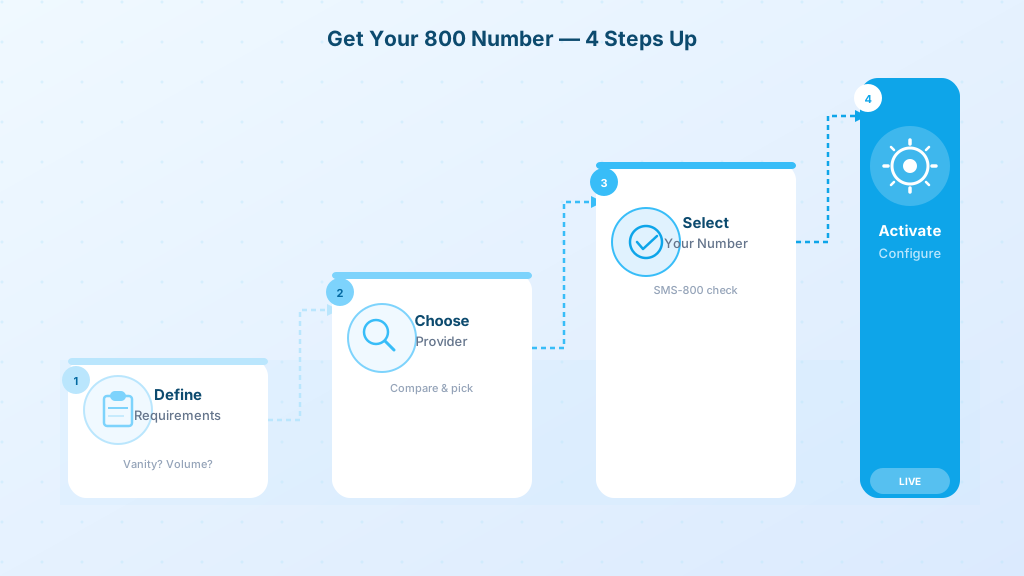
Step 1: Choose a Toll-Free Prefix
Select from available prefixes:
- 800
- 888
- 877
- 866
- 855
- 844
Each prefix offers the same benefits, so choose one that suits your business.
Step 2: Select a Provider
Research and choose a reputable provider:
- MeraTalk
- My Country Mobile
- AcePeak
- Verizon
- AT&T
- RingCentral
- Grasshopper
- FreedomVoice
Consider factors such as:
- Pricing and plans
- Features and functionality
- Customer support
- Reliability and uptime
Step 3: Check Availability
Verify the availability of your desired phone number:
- Use the provider's online tool or contact their customer support
- Ensure the number is not already in use
Step 4: Choose a Plan
Select a plan that suits your business needs:
- Basic plans for small businesses
- Advanced plans for larger enterprises
- Custom plans for specific requirements
Consider factors such as:
- Minute allocation
- Call routing and forwarding
- Voice mail and IVR
Step 5: Register Your Number
Complete the registration process:
- Provide business information
- Agree to terms and conditions
- Set up payment
Step 6: Configure Your Number
Set up your toll-free number:
- Define call routing and forwarding rules
- Configure voice mail and IVR settings
- Integrate with existing phone systems (if applicable)
Additional Considerations
- Porting: Transfer an existing toll-free number to a new provider.
- Vanity Numbers: Request a custom toll-free number.
- International Access: Ensure your number is accessible from outside the US and Canada.
Best Practices
To maximize the effectiveness of your toll-free number:
- Monitor Usage: Track call metrics to optimize customer service.
- Update Settings: Regularly review and update call routing and forwarding rules.
- Compliance: Ensure regulatory compliance.
Toll-Free Prefixes Beyond 800
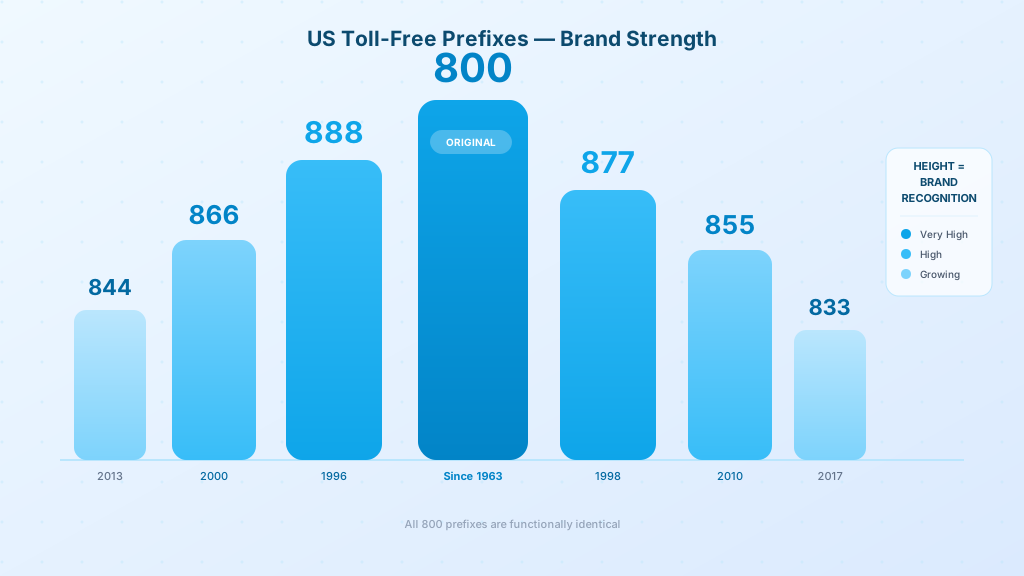
The 800 prefix is the original toll-free code, but several others are now available too.
Available Toll-Free Prefixes
The Federal Communications Commission (FCC) has designated the following prefixes as toll-free:
- 888: Originally introduced in 1996 to alleviate the shortage of 800 numbers.
- 877: Reserved for toll-free use in 1998, offering additional number options.
- 866: Introduced in 2000 to provide further relief for toll-free numbering.
- 855: Added in 2010 to expand toll-free number availability.
- 844: Introduced in 2013 to provide additional toll-free options.
- 833: The most recent addition, launched in 2017 to meet growing demand.
Benefits of Alternative Prefixes
Using alternative prefixes offers several advantages:
- Increased availability: More options for choosing a memorable number.
- Cost-effective: Similar pricing to traditional toll-free numbers.
- Brand differentiation: Stand out with a unique prefix.
Prefix-Specific Features
Some prefixes have distinct characteristics:
- 888: Often used for customer service, technical support, and sales.
- 877: Popular for premium services, conferencing, and fax-to-email.
- 866: Frequently used for business-to-consumer communication.
Choosing the Right Alternative
Consider the following when selecting an alternative prefix:
- Memorability: Choose a prefix and number combination easy to remember.
- Industry association: Select a prefix commonly used in your industry.
- Availability: Verify the availability of your desired number.
Best Practices
To maximize the effectiveness of your alternative toll-free number:
- Consistency: Use the same prefix across all marketing materials.
- Branding: Integrate the prefix into your brand identity.
- Customer education: Inform customers about the new prefix.
Common Uses for Alternative Prefixes
Alternative prefixes are used across various industries:
- Healthcare: 844 and 855 for patient support lines.
- Finance: 866 and 877 for customer service.
- Technology: 833 for technical support.
Scam and Safety Considerations
Toll-free numbers, including those with the 800 prefix, offer convenience but also pose safety risks. Understanding potential scams and taking preventive measures ensures a secure experience.
Safety Threats
Be aware of:
- Phishing scams: Fraudulent calls or messages seeking sensitive information.
- Spoofing scams: Scammers disguising their number as a legitimate toll-free number.
- Robocall scams: Automated calls pushing fraudulent services or products.
Prevention Measures
To safeguard against scams:
- Verify caller ID: Ensure the calling number matches the business's verified number.
- Monitor call patterns: Identify suspicious call activity.
- Train staff: Educate employees on scam recognition and response.
Security Best Practices
- Secure your number: Use strong passwords and two-factor authentication.
- Regularly update security: Stay current with provider security patches.
- Inform customers: Educate customers on potential scams and prevention.
Recognizing Red Flags
Watch for:
- Unsolicited calls: Unexpected calls requesting sensitive information.
- Pressure tactics: Urgent or threatening calls demanding immediate action.
- Poor communication: Calls with unclear or misleading information.
Reporting Scams
If you suspect a scam: For more, see toll-free numbers.
- File a complaint: Report to the Federal Communications Commission (FCC).
- Notify your provider: Inform your toll-free number provider.
- Alert customers: Warn customers of potential scams.
Additional Resources
- Federal Trade Commission (FTC): Guidance on toll-free number scams.
- National Do Not Call Registry: Protect customers from unwanted calls.
Texting and Toll-Free Numbers
Toll-free numbers on the 800 prefix are no longer voice-only. Once a number is text-enabled through its provider, customers can send and receive SMS on the same digits they already dial for support. This turns a single advertised number into a two-way channel for appointment reminders, order updates, and quick customer questions — without asking callers to save a separate mobile number.
- Two-way SMS lets support teams resolve simple questions without a phone call
- Verification is required before messaging goes live — carriers vet toll-free traffic to block spam
- Opt-in consent must be collected before sending marketing texts, and every message needs a clear opt-out
- High message volumes are supported, making toll-free SMS a fit for alerts and notifications at scale
Businesses that already run voice on a toll-free line should check whether their provider supports text enablement on the existing number. Enabling messaging on a number customers recognize builds on trust that has already been earned.
Conclusion
In today's competitive market, having a toll-free 800 number remains a valuable asset for businesses of all sizes. It provides the flexibility to reach customers nationwide while ensuring communication is simple and accessible. The 800 area code helps businesses project professionalism, improve customer satisfaction, and increase brand recognition.
As toll-free options continue to expand, the 800 prefix remains a trusted choice for businesses aiming to foster customer loyalty and streamline communication. By leveraging its many benefits, companies can enhance their customer service efforts and drive long-term success.
Ready to get started with 800 area code?
Join thousands of businesses using MeraTalk for Wholesale Voice, VoIP, and phone number services.
Contact MeraTalk Today