Introduction
California has more area codes than any other state in the United States — more than any other state, serving a population of nearly 40 million across the most telephonically complex geography in North America. The state's sheer size, population density, and economic output have driven continuous area code expansion since California's first three area codes (213, 415 and 916) were introduced in 1947.
Whether you received a call from an unfamiliar California number, you are looking to set up a local phone presence in a specific California city, or you simply want a complete reference for California area codes by region, this guide gives you everything in one place.
Key Takeaways
Covers California phone area codes in depth
Covers Los Angeles area code in depth
Covers San Francisco area code in depth
Covers San Diego area code in depth
Need a business phone number? Get a MeraTalk number in minutes, no contract required.
Get started freeCalifornia Area Codes at a Glance
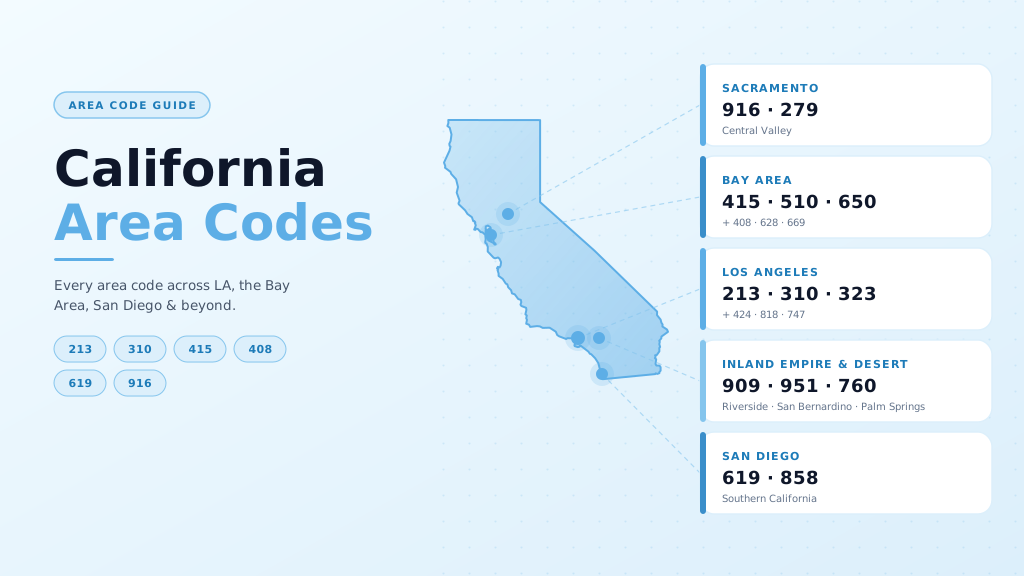
California is split into dozens of area codes, many of them overlays. Los Angeles, the Bay Area, San Diego, Sacramento and the Central Valley each have their own group of codes.
- Total: California has close to 40 active area codes
- Los Angeles area: 213, 310, 323, 424, 747, 818, 626, 562
- Bay Area: 415, 628, 510, 341, 650, 408, 669
- San Diego: 619 and 858
- Sacramento and Central Valley: 916, 279, 209, 559, 661, 805, 831
- North and Inland: 530, 707, 951, 909, 760, 714, 949
Los Angeles Area Codes
The Greater Los Angeles metropolitan area is served by more area codes than any other US metro. The original 213 code once covered the entire county; today, Los Angeles County and surrounding areas use at least eight active area codes.
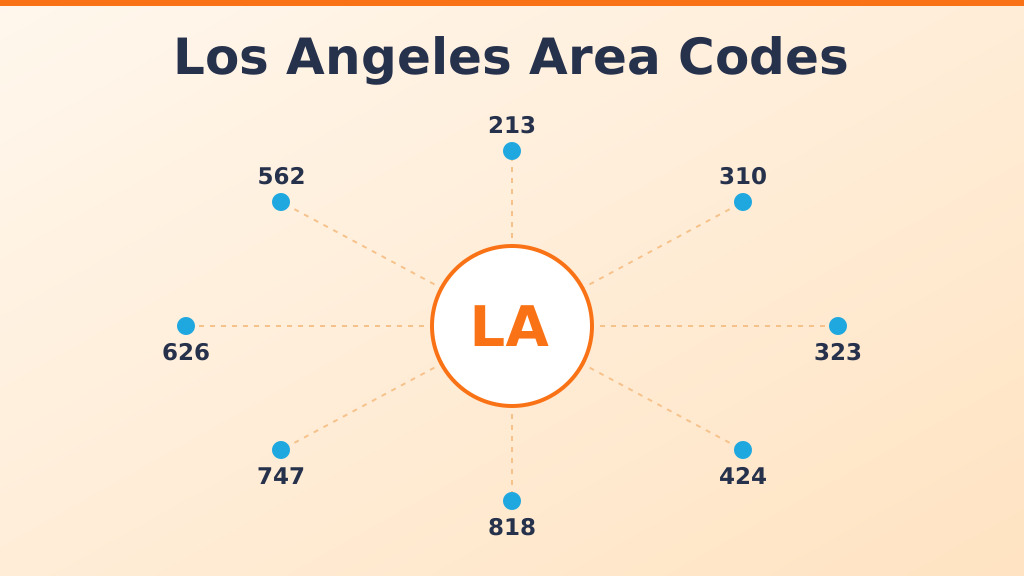
- 213 — Downtown Los Angeles, the oldest California code still in active use.
- 310 — West Los Angeles, Beverly Hills, Santa Monica, Torrance, Inglewood, and the South Bay.
- 323 — East Los Angeles, Hollywood, Koreatown, and communities between downtown and the 310 region.
- 424 — Overlay for 310, covering the same West LA geography.
- 747 — Overlay for 818, covering the San Fernando Valley.
- 818 — San Fernando Valley: Burbank, Glendale, Van Nuys, and Canoga Park.
- 626 — San Gabriel Valley: Pasadena, Alhambra, Arcadia, Pomona, El Monte.
- 562 — Long Beach, Whittier, Downey, Norwalk, Compton, and southeast LA County.
San Francisco Bay Area Codes
The San Francisco Bay Area uses seven area codes across the nine-county metro. The Bay Area's high concentration of tech companies, startups, and mobile-first workers has driven some of the fastest number depletion in the state.
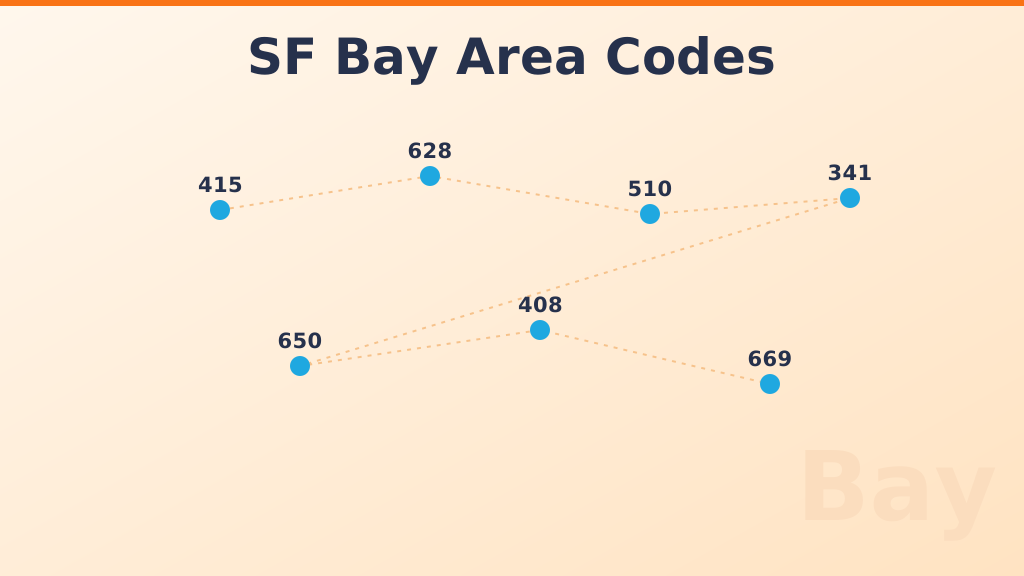
- 415 — San Francisco city and Marin County. The original California code.
- 628 — Overlay for 415, covering San Francisco and Marin.
- 510 — Oakland, Berkeley, Fremont, Hayward, and most of Alameda County.
- 341 — Overlay for 510, covering the East Bay.
- 650 — The Peninsula: San Mateo, Palo Alto, Menlo Park, Redwood City.
- 408 — Silicon Valley: San Jose, Santa Clara, Sunnyvale, Mountain View, and Cupertino.
- 669 — Overlay for 408, covering Silicon Valley.
The 415 area code carries significant brand cachet in technology and finance. For businesses establishing new San Francisco phone presences, 628 numbers are the more readily available option.
Get a local number in this area code for your business — set up in minutes.
San Diego Area Codes
San Diego County uses three area codes to serve its 3.3 million residents.
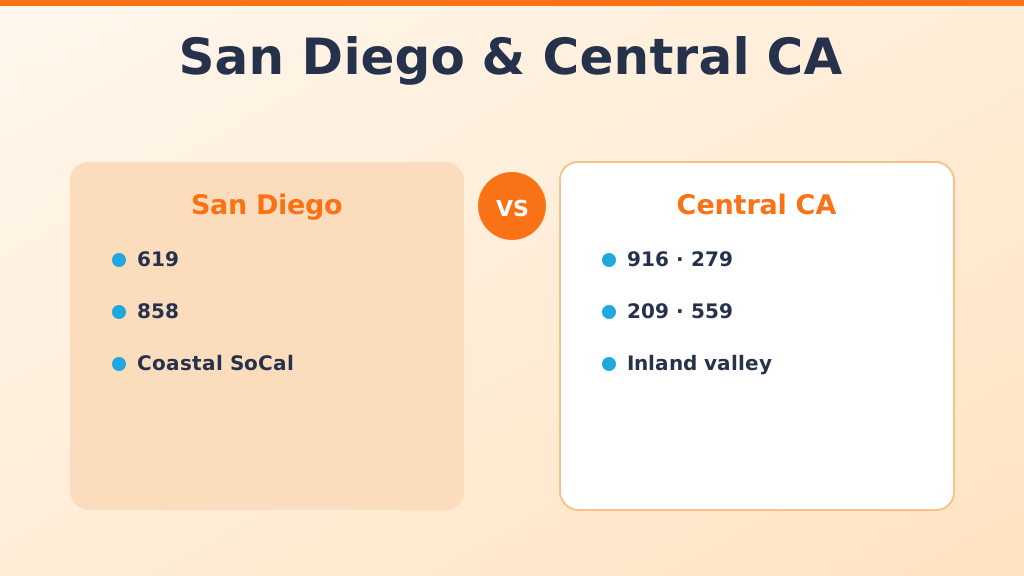
- 619 — Original San Diego area code, covering the city of San Diego, Chula Vista, El Cajon, and National City.
- 858 — North San Diego: La Jolla, Miramar, Carmel Valley, Poway, and Rancho Bernardo.
- 442 — Overlay on the 760 region, which includes north San Diego County and Imperial County.
Central California and Sacramento Area Codes
California's Central Valley and the Sacramento metro use several area codes to cover a long, densely populated inland corridor.
- 916 — Sacramento and the immediate metro area.
- 279 — Overlay for 916, covering Sacramento metro.
- 209 — Central Valley: Stockton, Modesto, and Merced County.
- 559 — Fresno metropolitan area and the southern San Joaquin Valley.
- 661 — Kern County: Bakersfield, Lancaster, and Palmdale.
- 805 — Central Coast: Ventura, Santa Barbara, Oxnard, and San Luis Obispo.
- 831 — Monterey Bay region: Monterey, Salinas, Santa Cruz, and Watsonville.
Northern California and Inland Empire Area Codes
Northern California covers a vast geographic area with relatively low population density, while the Inland Empire east of Los Angeles has experienced rapid population growth.
- 530 — Northern California: Redding, Chico, Yuba City, and the Sierra foothills.
- 707 — North Bay: Napa, Sonoma, Santa Rosa, Vallejo, and Eureka.
- 951 — Riverside County: Riverside, Corona, Moreno Valley, and Temecula.
- 909 — Inland Empire: Ontario, San Bernardino, Fontana, Rancho Cucamonga.
- 760 — Desert communities: Palm Springs, Coachella Valley, Victorville.
- 714 — Northern Orange County: Anaheim, Santa Ana, Orange, Fullerton.
- 949 — Southern Orange County: Irvine, Newport Beach, Laguna Beach.
How to Get a California Area Code Number
With close to 40 active California area codes, businesses have enormous flexibility in choosing which California region to represent with a local number. You do not need a physical presence in California to provision a California area code number through a cloud phone platform.
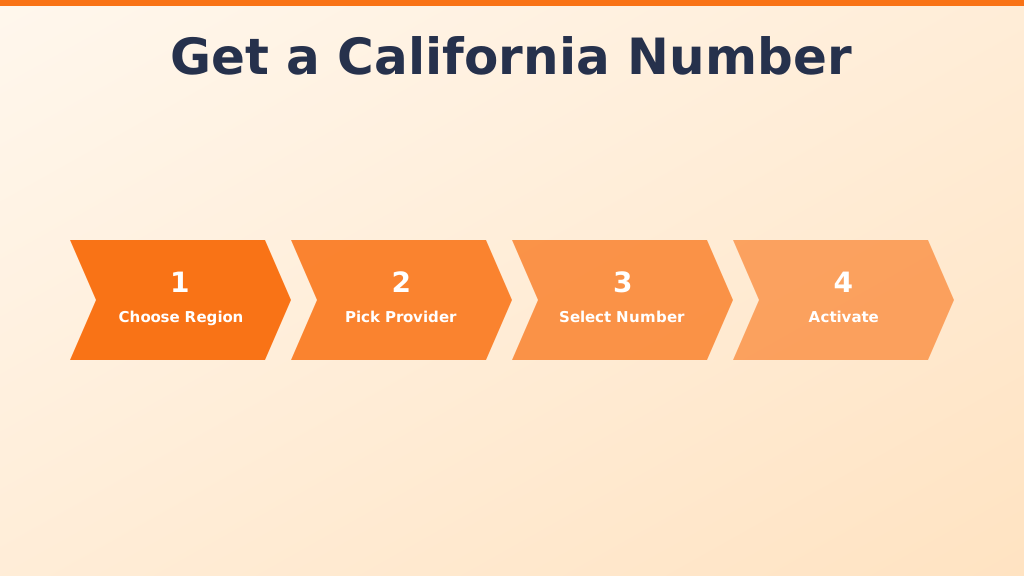
MeraTalk supports number provisioning across California area codes, with both voice and SMS capability on provisioned numbers. Search available California numbers by area code at meratalk.com.
Splits, Overlays, and Ten-Digit Dialing Explained
The state's numbering map grew through two different mechanisms. In the early decades, regulators used splits — dividing a territory in two and forcing one half to adopt a new code, as when 415 was carved up to create 510 and later 650. Splits keep seven-digit local dialing but make thousands of businesses reprint stationery and signage overnight.
Modern relief almost always comes as an overlay instead: a second code layered over the identical territory, as with 628 over 415, 341 over 510, and 669 over 408. Nobody's existing number changes, but every local call must then be dialed with the full ten digits. For more, see California area codes.
- Split — the map is divided; one side keeps the old code, the other gets a new one
- Overlay — a new code covers the same footprint; existing numbers stay untouched
- Ten-digit dialing — required wherever an overlay exists, which now covers most of the state's major metros
Why the Older Codes Carry Extra Prestige
Not all prefixes are perceived equally. Codes that date back decades — 213 in downtown Los Angeles, 415 in San Francisco, 619 in San Diego — have appeared in films, song lyrics, and business directories for generations, and callers instinctively read them as established local institutions. Newer overlay codes cover exactly the same streets but lack that cultural residue.
This shapes a practical decision for businesses. Legacy-code numbers are scarcer, since the pools have been drawn down for years, while overlay numbers are plentiful and functionally identical. A startup courting Bay Area investors may hunt for a 415 listing for the signal it sends; a service company scheduling appointments in the same neighborhoods loses nothing by taking a readily available 628.
The sensible approach is to treat the prefix as branding: pursue a heritage code when image matters to the audience, and take the overlay when speed and availability matter more.
Conclusion
California's roughly 40 active area codes reflect the scale and complexity of the most populous and economically productive state in the US. From 213 in Downtown Los Angeles to 530 in the rural north, each area code carries geographic associations that matter for businesses targeting specific California markets.
Whether you need a Los Angeles 310, a San Francisco 415, a San Diego 619, or a Silicon Valley 408, cloud phone platforms make California area code numbers available to businesses anywhere. Search available California numbers at meratalk.com.
Ready to get started with california area codes?
Join thousands of businesses using MeraTalk for Wholesale Voice, VoIP, and phone number services.
Contact MeraTalk Today