Introduction
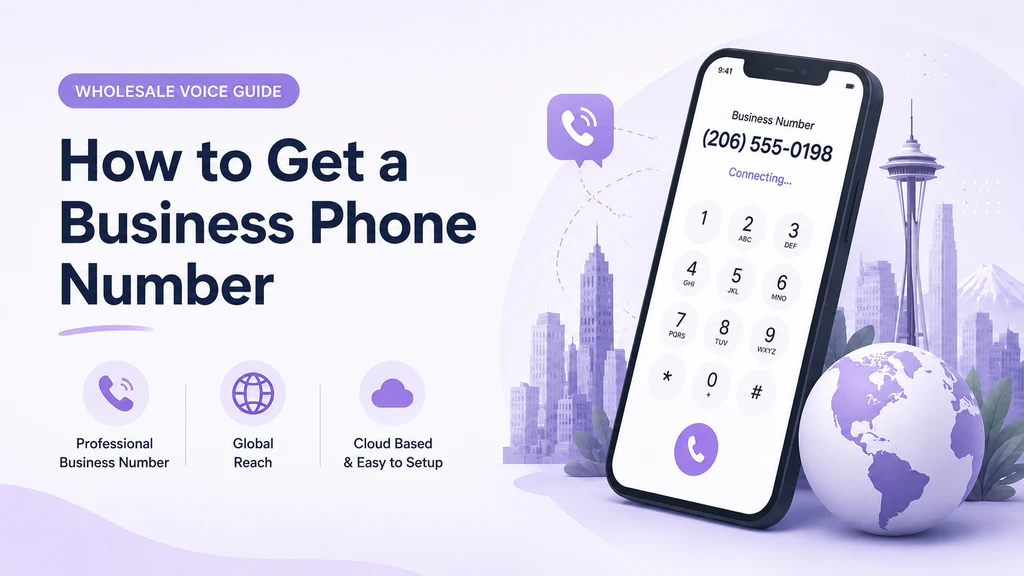
Most advice on getting a business phone number stops at 'pick a provider and choose a number'. The harder and more valuable question is which kind of number and which setup fits your situation, because a freelancer, a plumber with three vans, an online store and a twelve-person remote team have almost nothing in common when it comes to telephony.
This guide skips the definitions and works from five situations. For each one it recommends a number type, a setup and the mistakes to avoid. It then compares the five number options side by side and ends with a first-24-hours checklist you can work through the same day you order.
Key Takeaways
Covers get a business phone number in depth
Covers virtual business phone number in depth
Covers VoIP business phone number in depth
Covers business phone number for small business in depth
Need a business phone number? Get a MeraTalk number in minutes, no contract required.
Get started freeThe Five Number Options at a Glance
Before the situations, here is how the options compare. Note that these are not mutually exclusive categories: a number can be both local and virtual, and porting is a way of obtaining a number rather than a type of number.
| Option | What it is | Strength | Watch out for |
|---|---|---|---|
| Local | A number with a geographic area code, such as 212 or 310 | Reads as nearby and familiar; good for local search and local callers | Looks small for a national brand; area code may not match where the customer is |
| Toll-free | 800, 888, 877, 866, 855, 844 or 833 prefixes; free for the caller | Signals a company with national reach; easy to put on packaging and ads | Some customers associate it with call centers; texting needs a verification step |
| Vanity | A number spelling a word or following a pattern | Memorable on radio, vehicles and signs | Availability, premium cost, and poor readability when typed on a keypad |
| Virtual | A number not tied to a physical line or location, delivered over VoIP | Fast to set up, works on any device, can be changed without a new SIM | Needs a registered emergency address; quality depends on your internet and provider |
| Ported | Your existing number moved to a new provider | Keeps every listing, business card and saved contact working | Takes planning; do not cancel the old service until the port completes |
Solo Freelancer or Consultant
Your goal is to separate work from personal life and look established without paying for features you will not use. A virtual phone number that rings your mobile through an app is almost always the right answer. It lets you keep your personal SIM private, set business-hours greetings, and send unanswered calls to voicemail with transcription to email.
- Number type: local number in your own area code, or the area code of your main client base
- Setup: one number, mobile app, voicemail-to-email, a short professional greeting
- Skip: toll-free, multi-level menus, extensions
- Mistake to avoid: giving out your personal mobile 'just for now' - it never goes away
Local Service Business (Trades, Clinics, Salons)
Local customers search by area and call from their phone, often with an urgent problem. A local number in the area you serve reinforces that you are nearby, and it should be the same number on your website, your map listing and your vehicles so search engines and customers see one consistent record.
- Number type: local number in the primary service area; consider a tracking number per marketing channel only if you will actually review the data
- Setup: ring group that tries the owner and the office, then falls to voicemail; text-enabled if your customers prefer texting
- Hours: a distinct after-hours greeting with an emergency instruction if relevant
- Mistake to avoid: routing every call to one technician's mobile, so a job site means a missed customer
If you advertise on vehicles or signs, a vanity number is worth considering. Vanity numbers are most useful where people must remember a number with no way to click or scan it, but check how the number reads when spoken aloud before paying a premium.
Get virtual phone numbers for your business — set up in minutes.
Ecommerce and Support-Led Business
Customers of an online store may live anywhere, so a local area code carries no meaning. A toll-free number removes the cost of calling for the customer and gives your support line a recognisable, nationwide identity. Because the volume is predictable (order status, returns, delivery problems), the setup matters more than the number.
- Number type: toll-free as the published support line; a local number for outbound callbacks if your provider allows it
- Setup: an auto-attendant with three or four options at most, a queue with callback option, and a published hours notice
- Texting: if you plan order notifications by text, confirm the toll-free verification requirement before launch
- Mistake to avoid: a long menu that makes customers press zero repeatedly - measure how many give up in the menu
As volume grows, you will need to think about calls beyond the first dozen agents. At that stage, the questions move from number choice to routes, caller ID presentation and carrier capacity, which our cloud contact center guide covers for teams with sustained call volume.
Remote or Hybrid Team
A distributed team needs numbers that belong to the company, not to a person's phone, plus a way to present a consistent identity from many devices. A VoIP phone system with a mobile and desktop app means anyone can place and answer calls under the company number, and numbers can be reassigned when people leave.
- Number type: one main local or toll-free number for inbound, direct numbers for people who need them
- Setup: ring groups by function (sales, support), presence, shared voicemail, call recording where you have consent practice defined
- Emergency calling: each user's location needs to be set; remote workers must update it when they move
- Mistake to avoid: assigning direct numbers to individuals with no plan to redirect them when they leave
Multi-Location Business
Multiple sites raise a choice between one number for everyone and a number per location. The usual answer is both: a local number per location for local search and neighbourhood trust, and one toll-free or main number for national marketing, all routed through the same phone system so that overflow between sites works.
- Number type: a local number per site in that site's area code, plus a toll-free main number
- Setup: location-specific greetings, shared overflow queues, per-number reporting
- Emergency calling: a registered address for each location and each user's work site
- Mistake to avoid: a single national number that sends every caller to a generic menu with no way to pick their nearest location
Where you are replacing existing lines at every site, treat porting as a project: inventory all numbers, group them by losing carrier and port in stages.
Porting Your Existing Number Without Downtime
Porting lets you move a number you already use to a new provider. In the US, number portability is a regulatory right, so a carrier cannot hold your number hostage. In practice, delays come from mismatched account details. Simple ports of a single line are expected to complete quickly, while ports involving many numbers, toll-free numbers or business accounts with multiple lines can take longer, and timing varies by losing carrier.
- 1Get a copy of the latest bill and note the exact account name, billing address and any account number or PIN
- 2Do not cancel the old service - cancelling often cancels the number
- 3Submit the port request with details matching the old account exactly
- 4Set up routing on the new service before the port date, so calls ring correctly when the number moves
- 5Test inbound calls the moment the port completes, then cancel the old service
Number Types vs How the Phone Network Treats Them
The technical term for a modern business number is often an interconnected Voice over IP service. Your provider assigns or ports the number, and the call travels over the internet until it reaches the public network. Three consequences are worth knowing.
- Emergency calls - VoIP numbers need a registered dispatchable address, because the network cannot infer location from a line
- Texting - texting from local numbers generally requires registering the use case with carriers, and toll-free numbers have their own verification process
- Caller ID reputation - outbound calls from new numbers are scored by carrier and analytics services, so new numbers should be warmed up with normal call patterns before heavy use
These are provider-neutral facts. Ask any provider how each is handled before you commit to a number type.
Your First 24 Hours: A Checklist
- 1Pick the situation above that fits best and decide number type before comparing providers
- 2Check number availability in the area code you want, and check how it looks spoken aloud
- 3If porting, gather the bill, account name and PIN, and submit the request early in the day
- 4Set the business hours, greeting and voicemail destination before publishing the number
- 5Register the emergency address for every user and location
- 6Install the app on each device that will take calls and place a test call from an outside phone
- 7Make a test outbound call to a mobile phone and confirm how the caller ID displays
- 8Set up voicemail-to-email and check that a message arrives
- 9Update your website, Google Business Profile and email signature once testing passes
- 10Write down who owns the account, who can change routing and where the credentials are kept
Choosing a Provider Without a Ranking
Rather than chasing a list of top providers, check the same short list with every candidate: does the provider own or directly control number inventory in the area codes you need, how are ports handled, how is emergency address registration done, what are the texting registration steps, and who can you reach when something breaks. MeraTalk offers virtual, local, toll-free and vanity numbers across US area codes and 50+ countries, so you can compare it against your shortlist on those same questions.
Conclusion
Choosing a business number is a fit question, not a features race. Match the number type to the situation, plan the port and the emergency address, and test everything before you publish the number. The ten-item checklist above takes less than a day and prevents the most common launch problems.
Ready to get started with business phone number?
Join thousands of businesses using MeraTalk for Wholesale Voice, VoIP, and phone number services.
Contact MeraTalk Today