
Introduction
A vanity phone number is a number whose digits also spell a word or phrase on the keypad. 1-800-FLOWERS is the textbook case: dialled with letters or as 1-800-356-9377, it reaches the same place. The number is an ordinary one; the vanity part is only which digits were chosen.
Most pages on this topic are search boxes. This guide covers what a search box cannot tell you: how to test a word properly, how toll-free and local vanity numbers differ, why a number you want may be unavailable, which mistakes make a vanity number cost you calls, and how to secure and route the one you pick.
Key Takeaways
Covers toll-free vanity number in depth
Covers 800 vanity number in depth
Covers vanity number search in depth
Covers mobile vanity numbers in depth
Need a business phone number? Get a MeraTalk number in minutes, no contract required.
Get started freeHow Letters Map to Digits, With a Worked Example
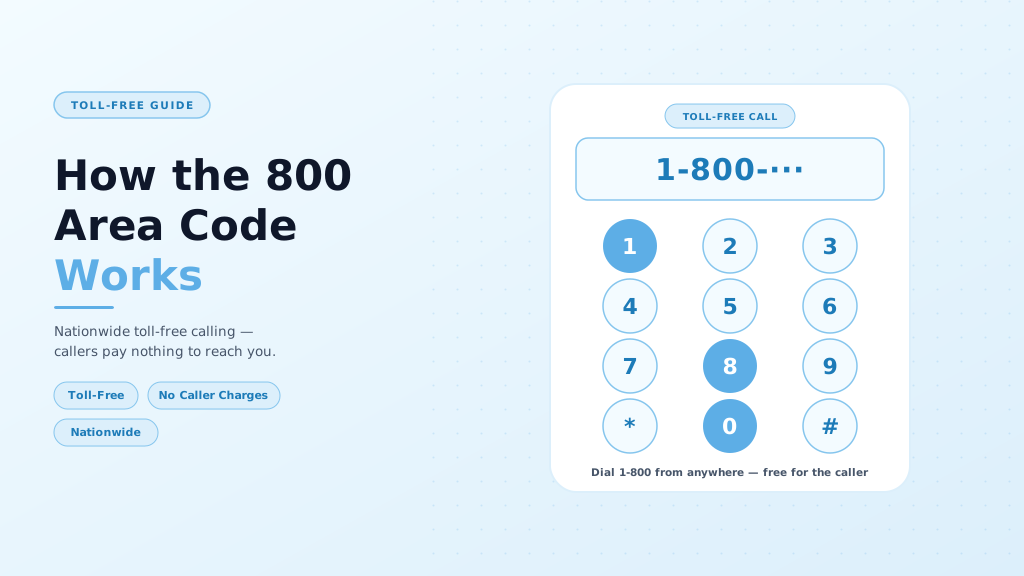
Standard keypad mapping is 2=ABC, 3=DEF, 4=GHI, 5=JKL, 6=MNO, 7=PQRS, 8=TUV and 9=WXYZ. Digits 0 and 1 carry no letters, so a vanity word can never contain a 0 or 1 position; those must stay as numerals if you need them.
Worked example with an obviously illustrative word: take EXAMPLE. E=3, X=9, A=2, M=6, P=7, L=5, E=3, so 1-800-EXAMPLE dials as 1-800-392-6753. That is seven letters for the seven digits after the 800 prefix. Compare 1-800-CONTACTS: the word has eight letters but only seven digits are needed, so the number is 1-800-266-8228, which is C-O-N-T-A-C-T, and the final S is a convenience for the reader rather than something the network uses.
To test a candidate yourself, write the word, convert each letter, count the digits, and then check it three ways: say the number aloud as digits, say it as letters, and ask someone to write down the word you tell them. If the word needs explaining or spelling, it will cost you calls.
Toll-Free Vanity vs Local Vanity Numbers
Most well-known vanity numbers are toll-free, because every toll-free number is the same length: a three-digit prefix followed by seven digits, which gives seven letters to play with. A toll-free number means the caller does not pay, and the business is billed for the inbound minutes. For background on how those prefixes work, see our guide to the 800 area code and the other toll-free ranges.
| Toll-free vanity | Local vanity | |
|---|---|---|
| Structure | Prefix (800, 888, 877, 866, 855, 844, 833) + 7 characters | Your chosen area code + 7 characters |
| Who pays for the call | The business, per inbound minute | Normal call charges apply to the caller |
| Choice of words | Wide, but short common words are usually taken | Narrower, because exchange and area-code combinations are limited |
| Best for | Nationwide advertising and broadcast media | Local trade, where a local area code builds trust |
Mobile vanity numbers usually mean a number with a memorable ending, such as repeating digits, rather than a word. They can be a good fit for a local trader who wants an easy-to-remember mobile line, but they are not a replacement for a toll-free word on a national campaign.
Why the Number You Want May Not Be Available
Toll-free numbers are allocated through the toll-free number registry, which Somos administers, and are generally issued first come, first served under the FCC's toll-free numbering rules. Numbers are managed by Responsible Organizations (RespOrgs), which are carriers or service providers authorised to reserve and assign them. A number that looks free in one search may already be held, which is why different search tools can disagree.
A reserved number is not yet working. Under FCC rules a reservation is time-limited and is meant to be followed by assignment to a subscriber, and a number that is not activated eventually returns to the spare pool. If you find the word you want, act on it rather than leaving it in a shortlist.
When a word is taken, the realistic options are the same word on another prefix, a variant spelling, or approaching the current holder. Any transfer from a current holder goes through the number's RespOrg, so treat 'buy it from the owner' offers with care and get the terms in writing.
Get virtual phone numbers for your business — set up in minutes.
Brand, Trademark and Mishearing Risks
A vanity number that spells a competitor's trademark, or something confusingly similar, can create a legal problem even if the number is technically available. Check the word against trademark records before you commit to printing it on vehicles and signage. If in doubt, ask a trademark professional.
Then think about how callers will actually use it:
- Say it aloud. Words that sound like several spellings (for example, a word ending in 'ee' or with a silent letter) send callers to the wrong digits.
- Check the letter-to-digit cases that are easy to mistype: the letters on 7 and 9 each cover four characters, and mixing S with Z or P with R is common.
- Consider the misdial: if a single wrong digit lands on an unrelated business, you are paying to advertise for them. Dial a few near-miss variants to see what answers.
- Reserve variants you can afford: a common misspelling of your word or the same word on a second prefix can catch the callers who guess.
- Print the digits next to the word in advertising. Many callers will use the numerals anyway.
Seven Letters or Ten? Choosing the Right Length
A seven-letter word fills the whole number after the prefix. Shorter words leave room for a few numerals, though mixing digits into a word usually reduces memorability. A phrase of two or three words usually reads better than one long word because callers can chunk it.
Words longer than seven letters can be printed, but only the first seven map to the dialled digits, as in the CONTACTS example above. If you print a longer word, make sure the first seven letters form a sensible number on their own, and print the digits beside it so callers do not keep dialling past the end.
How to Get a Vanity Number in 5 Steps
- 1List five to ten candidate words or phrases and convert each to digits using the keypad mapping.
- 2Run the aloud-and-written test on each, and drop anything that needs spelling out or that spells a trademark you do not own.
- 3Search each candidate across all toll-free prefixes (and across local area codes if you want a local number) in a provider's number search.
- 4Provision or port the number so that it is assigned to your company as the subscriber, not to an agency or an individual.
- 5Configure routing and testing: destination, business hours, failover and a greeting, then test from a mobile and a landline using both the letters and the digits.
If the number already exists with another provider, you can port it rather than start over; the number stays active on the old carrier until the new one takes over. Because the destination can be any phone number or a VoIP service, the same number can ring a desk phone, a mobile or a cloud app.
Routing the Number Once You Have It
A vanity number is only as good as the call experience behind it. Decide first where calls should land: one phone, a ring group, an IVR menu or a queue. Add a fallback so that a busy or unanswered call ends in a mailbox or overflow team rather than a dead tone.
A short greeting that repeats the vanity number reinforces it in the caller's memory. If you advertise on more than one channel, consider giving each channel its own number that forwards to the same team so that call logs show which channel produced the call. Our guide to toll-free call forwarding covers the routing patterns in detail. For more, see toll-free number registry.
Protecting the Number Once You Own It
- Keep the number registered to the company itself, not to an employee, agency or reseller account.
- Know which carrier acts as the number's RespOrg and keep those records current.
- Set billing alerts so an expired payment method never silently cancels service.
- When changing providers, port the number; never cancel first and reprovision later.
- Treat it like a trademark: assign an owner and review it annually.
A number that lapses can return to the available pool where anyone, including a competitor, can claim it. Rebuilding recognition around a replacement number costs far more than preventing the loss.
Conclusion
A good vanity number is chosen by testing, not by searching alone: convert the letters, say it aloud, check the trademark and misdial risk, then secure it in your company's name and route it with a fallback. Search available toll-free and local vanity options, or port an existing number, at meratalk.com/products/phone-number/vanity-phone-number.
Ready to get started with vanity phone number?
Join thousands of businesses using MeraTalk for Wholesale Voice, VoIP, and phone number services.
Contact MeraTalk Today