Introduction
The United States phone number format is one of the most standardised in the world — ten digits, structured consistently across more than 300 active area codes, governed by the North American Numbering Plan (NANP) since 1947. Yet the number of ways those ten digits get displayed, stored, and transmitted creates real confusion for businesses, developers, and anyone managing a multi-country database.
This guide covers the complete anatomy of a US phone number — from country code to subscriber number — including all standard formatting conventions, E.164 notation for developers, special number types, and the rules that govern what makes a valid US phone number today.
Key Takeaways
Covers American phone number format in depth
Covers US telephone number structure in depth
Covers E.164 format in depth
Covers NANP number format in depth
Need a business phone number? Get a MeraTalk number in minutes, no contract required.
Get started freeThe Anatomy of a US Phone Number
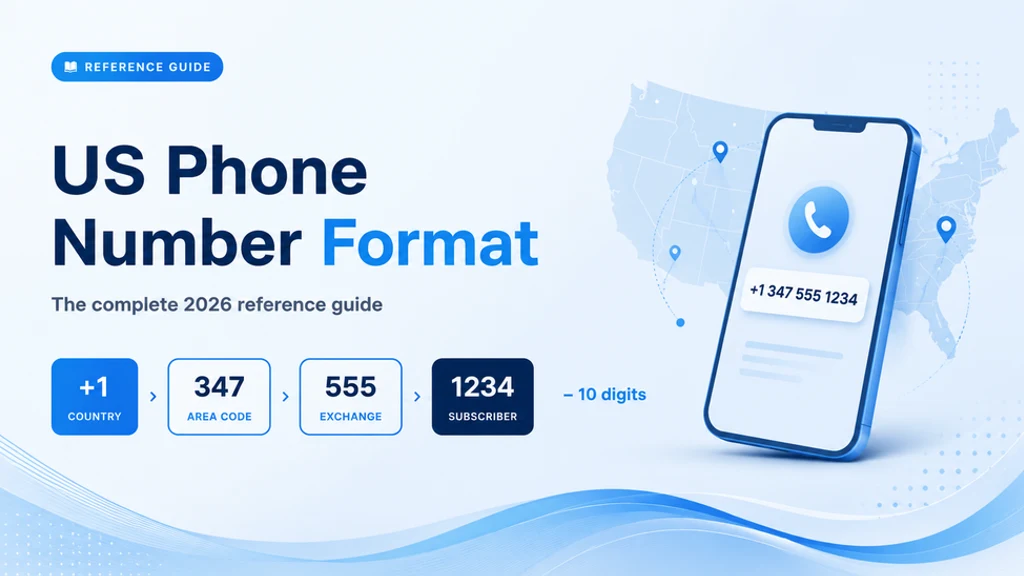
A standard US phone number consists of 10 digits structured as: NXX-NXX-XXXX, where N is any digit from 2–9 and X is any digit from 0–9. Including the country code, the full number is 11 digits: 1-NXX-NXX-XXXX.
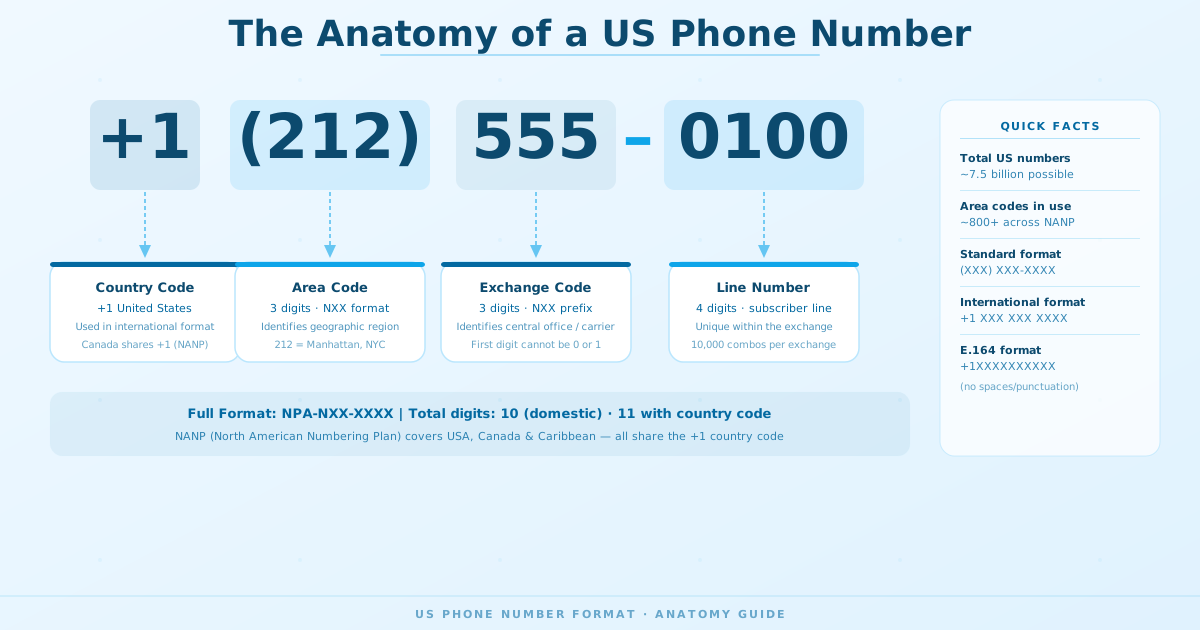
Country Code: +1
The United States country code is +1. The +1 country code also applies to Canada, many Caribbean nations, and US territories including Puerto Rico and Guam — all members of the North American Numbering Plan (NANP).
Area Code (NPA — Numbering Plan Area): 3 digits
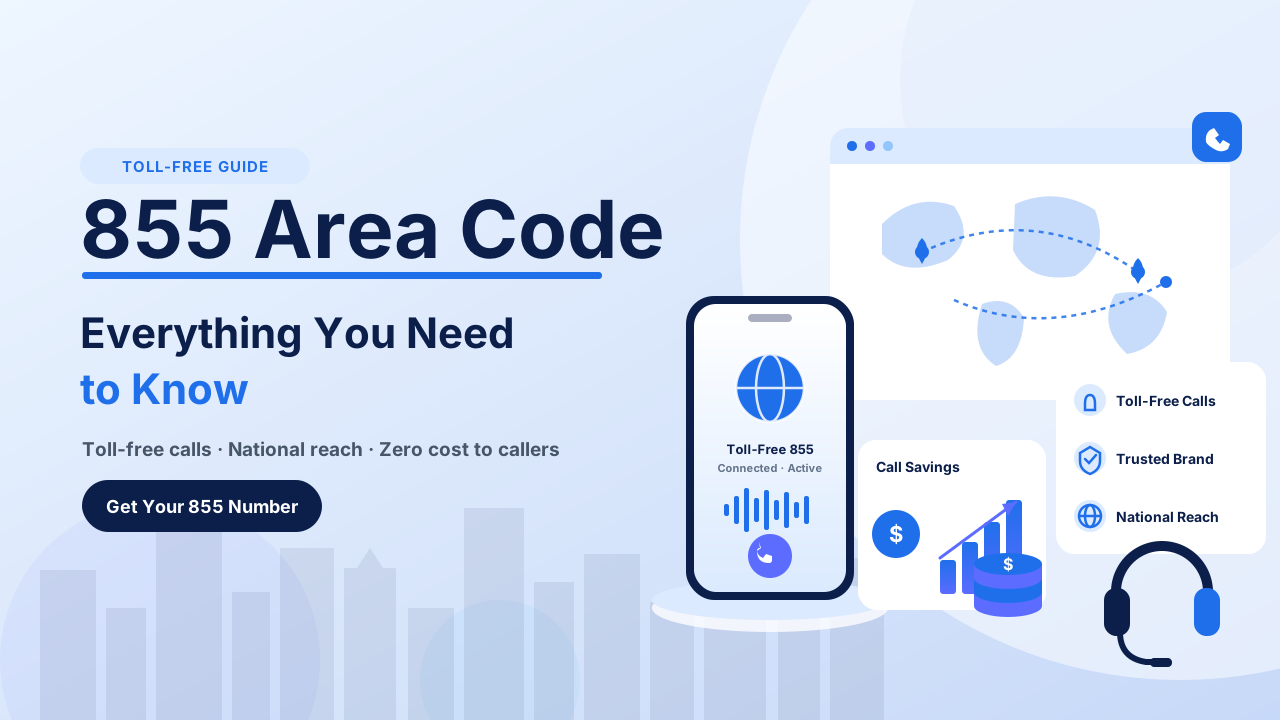
The first three digits identify the geographic region or service type. Geographic area codes identify a specific state, part of a state, or metropolitan area. Non-geographic area codes serve special purposes: 800, 833, 844, 855, 866, 877, and 888 are toll-free.
Central Office Code (NXX Prefix): 3 digits
The second group of three digits is the central office code, also called the exchange prefix. The first digit must be 2–9 (not 0 or 1).
Subscriber Number (Line Number): 4 digits
The final four digits identify the specific line within a central office code, giving each NPA-NXX combination 10,000 possible subscriber numbers (0000–9999).
Standard US Phone Number Formatting Conventions
US phone numbers are displayed in several standard formats depending on context.
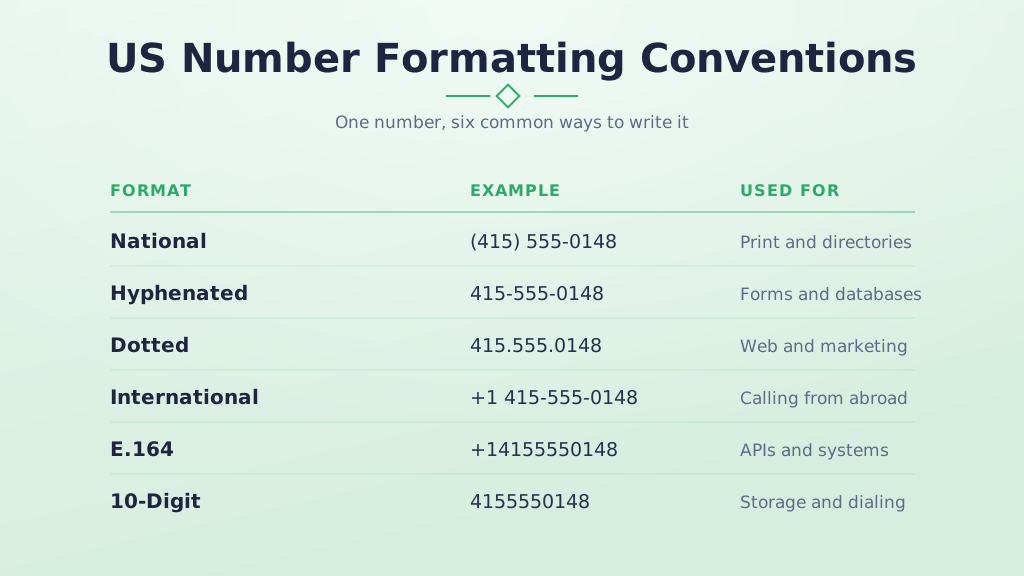
- (212) 555-1234 — The most common US format for printed and web display.
- 212-555-1234 — Alternate format omitting parentheses.
- 212.555.1234 — Dot notation, popular in design and branding contexts.
- 2125551234 — All digits, no separators. Common in databases and API payloads.
- +1 212 555 1234 — E.164 with spaces. Used in international contexts.
- +12125551234 — E.164 compact format. The international standard for telephony systems.
E.164 Format: The International Standard
E.164 is the ITU international standard for phone number format used in telephony systems, SMS APIs, VoIP platforms, and databases. Every phone number in E.164 format is globally unique and unambiguous.
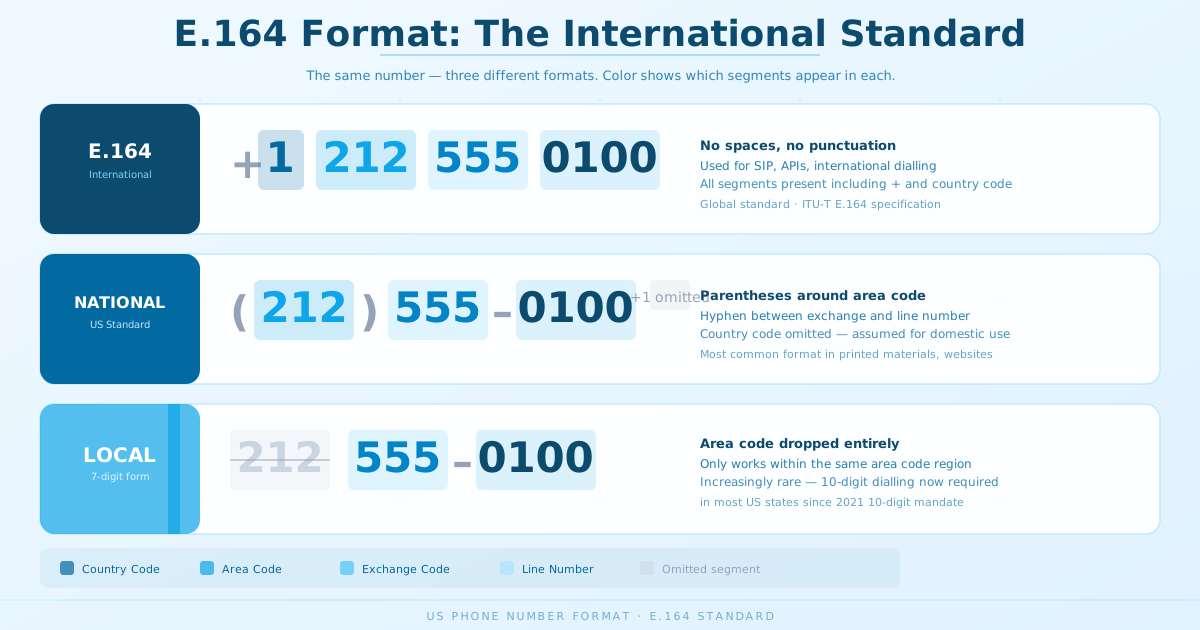
- Begins with + followed by the country code (no spaces between + and country code).
- No spaces, hyphens, or parentheses.
- Maximum 15 digits total (including country code).
- US example: +12125551234 (+ country code 1 + area code 212 + prefix 555 + line 1234).
For developers integrating telephony APIs, always store and transmit phone numbers in E.164 format. When accepting user input, strip formatting characters and prepend +1 for US numbers before storage.
Get virtual phone numbers for your business — set up in minutes.
Special US Number Types and Their Formats
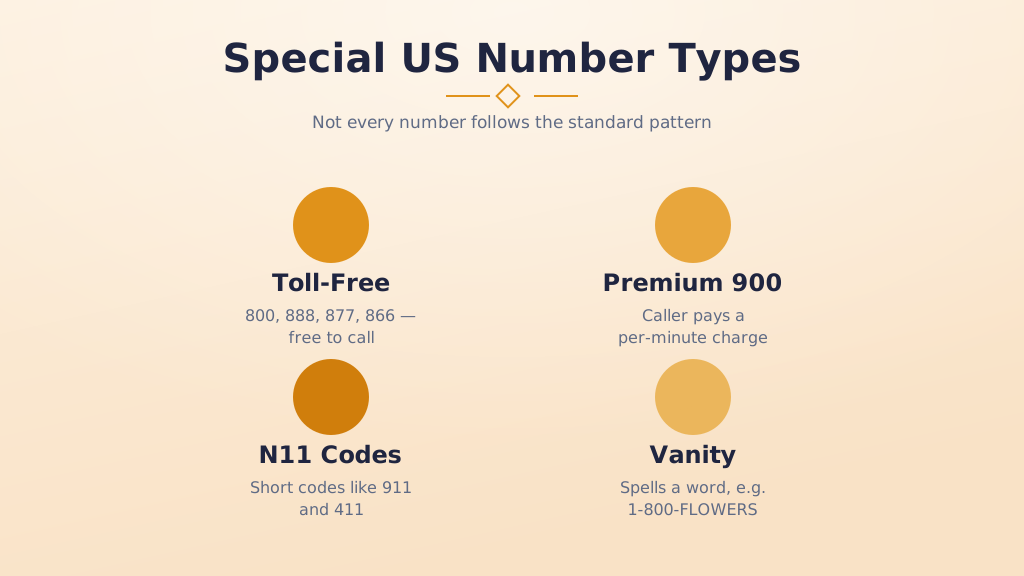
Not all US phone numbers follow the standard geographic format. Several special number categories serve specific purposes.
Toll-Free Numbers (8XX)
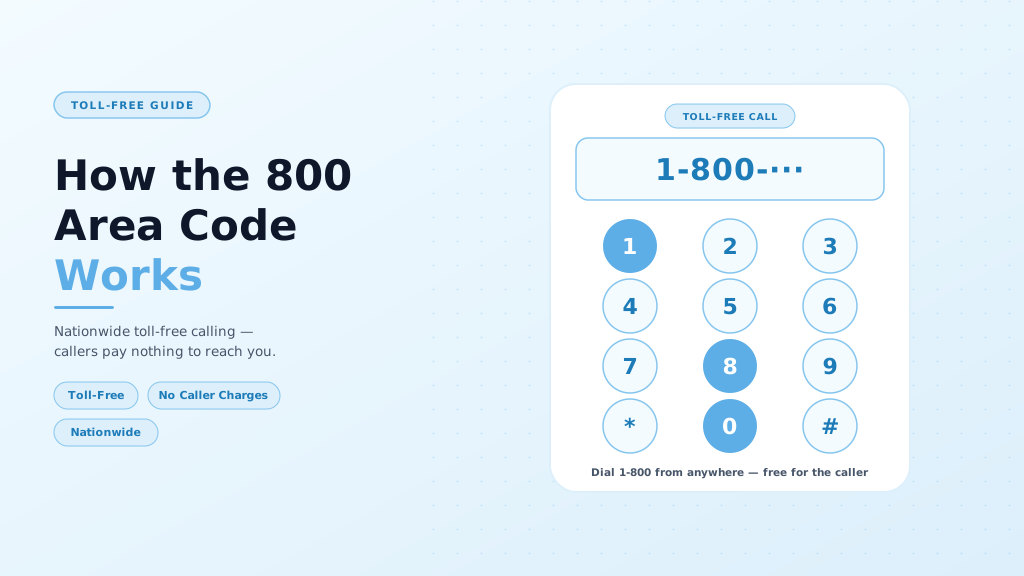
Toll-free numbers use area codes 800, 833, 844, 855, 866, 877, and 888. Calls to these numbers are free for the caller. Format: 1-800-XXX-XXXX. In E.164: +18XXXXXXXX.
N11 Service Codes
Three-digit codes: 211 (community services), 311 (non-emergency municipal), 411 (directory assistance), 511 (traffic), 611 (carrier service), 711 (TRS relay), 811 (utility notification), 911 (emergency).
US Area Codes by State: Key Examples
The NANP includes over 300 active area codes across the United States. Key area codes for major states:
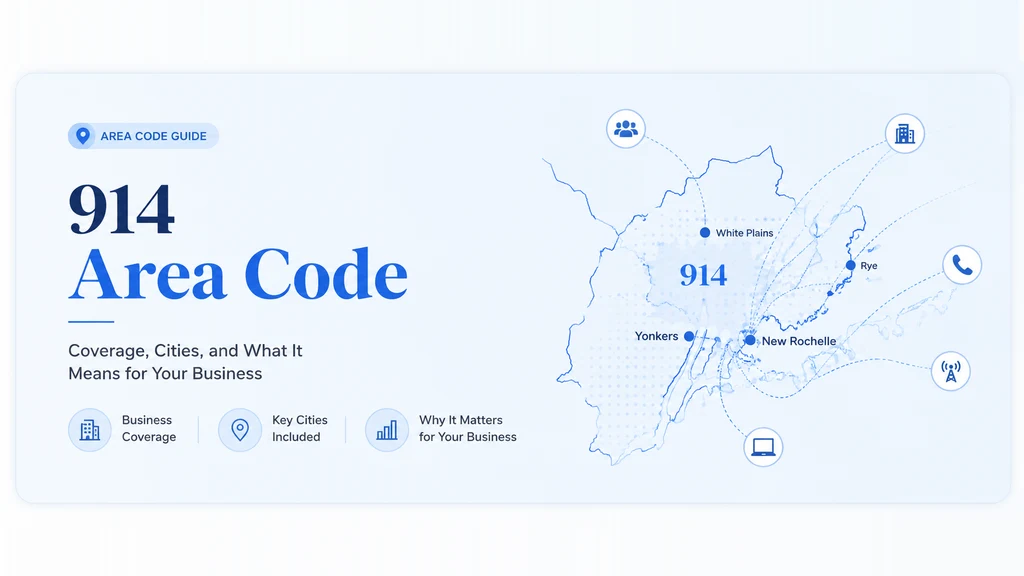
- New York: 212, 332, 646 (Manhattan); 718, 347, 929 (outer boroughs); 914 (Westchester)
- California: 213, 323 (Los Angeles); 415, 628 (San Francisco); 408 (San Jose); 858, 619 (San Diego)
- Texas: 214, 469, 972 (Dallas); 713, 832, 281 (Houston); 512 (Austin)
- Florida: 305, 786 (Miami); 407, 689 (Orlando); 813, 727 (Tampa Bay)
- Illinois: 312, 872 (Chicago loop); 773 (Chicago residential)
Dialing US Numbers from Outside the Country
Reaching a US number from abroad follows a consistent pattern: dial the local international exit code, then the country code 1, then the full ten-digit number. From most of Europe and Asia the exit code is 00, so a Manhattan line becomes 00-1-212-555-1234.
From mobile phones worldwide, the + symbol substitutes for any exit code — +1 212 555 1234 works from virtually any handset, which is why E.164 notation is the safest way to publish a number for an international audience.
Callers within the North American Numbering Plan — Canada and many Caribbean nations — skip the exit code entirely and dial 1 plus the ten digits, exactly as a domestic US long-distance call. Businesses printing numbers for mixed audiences should show the + form so every reader can dial it without translation.
Validating US Numbers in Software: Common Pitfalls
Developers regularly trip over the same handful of mistakes when validating North American numbers. A simple ten-digit length check accepts strings that can never be real numbers, while overly strict pattern matching rejects valid input typed with spaces, dots, or parentheses. Robust validation strips formatting characters first, then applies the structural rules of the numbering plan.
- Both the area code and the prefix must start with a digit from 2 through 9 — a leading 0 or 1 in either position is invalid
- Accept an optional leading 1 or +1 and normalize it away before storing
- Reject N11 patterns (such as 911 or 411) appearing as an area code
- Store the cleaned result in E.164 form and apply display formatting only at render time
- Prefer a maintained parsing library over a homegrown regular expression — numbering rules evolve as new area codes activate
Validation confirms a number is well-formed, not that it is in service — only a live lookup or verification call can prove a number actually rings.
Number Portability: Why Digits No Longer Guarantee Location
The structure of a US number once encoded real facts: the area code told you the region, and the prefix often narrowed it to a town or exchange. Local number portability changed that. Subscribers can keep their numbers when switching carriers, and VoIP services let businesses hold numbers from markets where they have no physical office. Mobile users routinely carry a number from one state to a residence in another for years.
For anyone building on phone number data, the practical rule is: treat the area code as a hint about origin, never as proof of current location. Applications that need true geography should rely on billing addresses, registered E911 locations, or explicit user input. The number itself remains a stable identifier — it just stopped being a map coordinate.
Conclusion
The US phone number format — 10 digits, structured as NPA-NXX-XXXX — has been the foundation of North American telecommunications since 1947. Understanding the anatomy, formatting conventions, and E.164 standard is essential for businesses managing phone systems, developers building telephony integrations, and anyone working with US phone number data.
For businesses provisioning US phone numbers in any area code, MeraTalk supports the full NANP across all 300+ active area codes. Search available numbers at meratalk.com.
Ready to get started with US phone number format?
Join thousands of businesses using MeraTalk for Wholesale Voice, VoIP, and phone number services.
Contact MeraTalk Today