Key Takeaways
Covers voip origination in depth
Covers sip origination in depth
Covers voip origination provider in depth
Covers wholesale origination in depth
Explore MeraTalk's Wholesale Voice solutions — built for carriers, resellers, and enterprises.
Learn moreWhat Is Wholesale VoIP Origination?
Wholesale VoIP origination is the process of receiving a call from an end-user and sending it into the carrier network for routing and delivery. When someone dials a number, the originating carrier — the provider that owns the caller's phone number and connection — handles this first leg of the call.
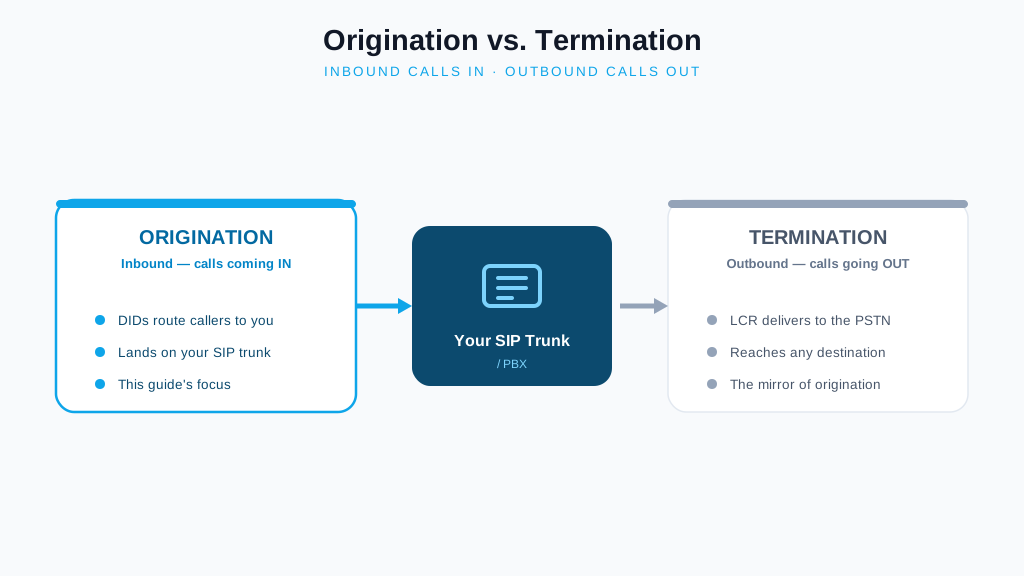
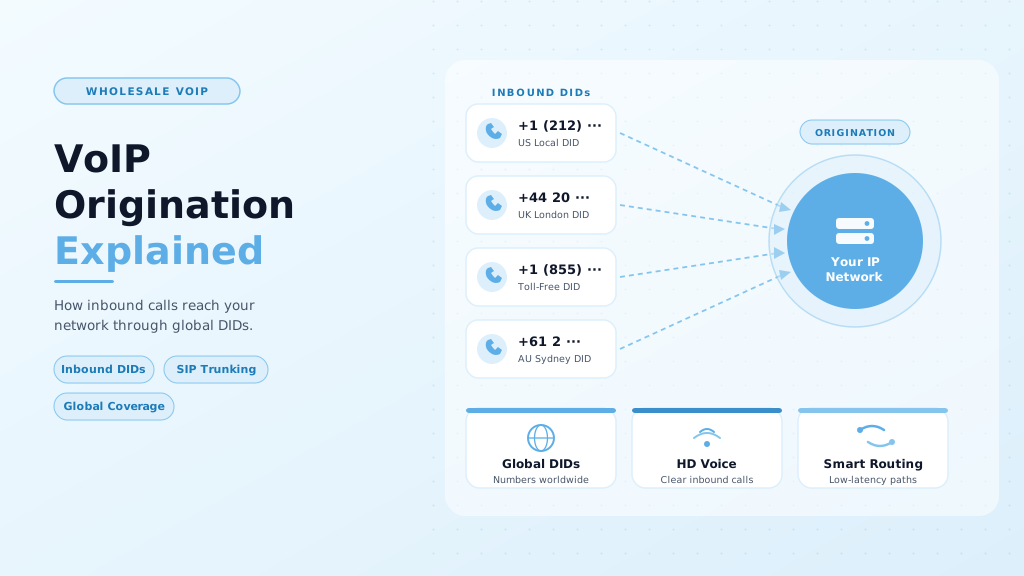
In the VoIP context, origination means inbound call delivery. It receives calls to a specific phone number (a DID — Direct Inward Dialing number) and routes them to the subscriber's IP-based phone system. It is the inbound counterpart to termination, which handles outbound delivery.
Origination vs. Termination
These two terms describe opposite ends of every phone call. Origination handles the start — it receives the call and enters it into the routing network. Termination handles the end — it delivers the call to the destination number. Every call has both legs.
- Origination: inbound call handling — receiving calls to your numbers and routing them to your platform.
- Termination: outbound call delivery — sending calls from your platform to their destination numbers.
Origination vs Termination: The Practical Differences
Origination and termination are the two directions of one wholesale relationship, and they are bought, priced and troubleshot differently.
- Direction — origination delivers calls into your platform from the public telephone network; termination sends calls from your platform out to it.
- What you buy — origination is usually sold as numbers (DIDs or toll-free numbers) with a capacity limit; termination is sold by the minute by destination.
- How it is priced — origination is often a monthly fee per number plus charges for inbound minutes, while termination is a per-minute rate that varies widely by country.
- What goes wrong — origination problems tend to be number coverage, porting and call delivery; termination problems tend to be answer rates, caller ID delivery and route quality.
- Who controls the route — with origination the carrier that holds the number decides how a call reaches you; with termination you or your supplier choose the route for each call.
Most operators need both. Buying them from one supplier simplifies billing and support, while splitting them lets you pick the best supplier for each direction.
How VoIP Origination Works Technically
VoIP origination runs on the SIP (Session Initiation Protocol) standard. An origination provider holds a pool of phone numbers (DIDs) assigned to geographic regions or toll-free prefixes. When a call arrives for one of those numbers, the provider's SIP infrastructure routes it to the IP address registered by the number's owner.
DID Numbers and Origination
A Direct Inward Dialing (DID) number routes inbound calls to a specific SIP trunk or endpoint. When you buy a phone number from a VoIP provider, you are buying a DID from their origination infrastructure. The provider receives calls from the PSTN and delivers them to your SIP trunk or VoIP platform.
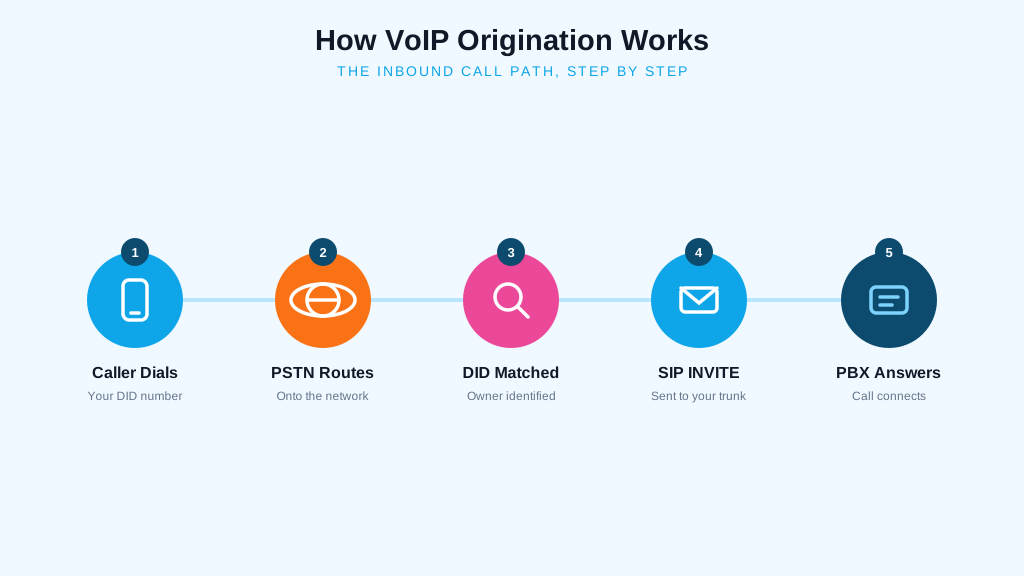
The Technical Path of an Inbound VoIP Call
- 1A caller dials your phone number from any device.
- 2The caller's carrier routes the call through the PSTN toward the number's assigned carrier.
- 3The origination provider receives the call and matches it to a registered SIP endpoint.
- 4The call is delivered to your SIP trunk, PBX, or VoIP application as an incoming SIP INVITE.
- 5Your phone system answers the call and routes it to the appropriate extension, queue, or IVR.
Get Wholesale Voice termination with transparent wholesale pricing.
What to Look for in a Wholesale VoIP Origination Provider
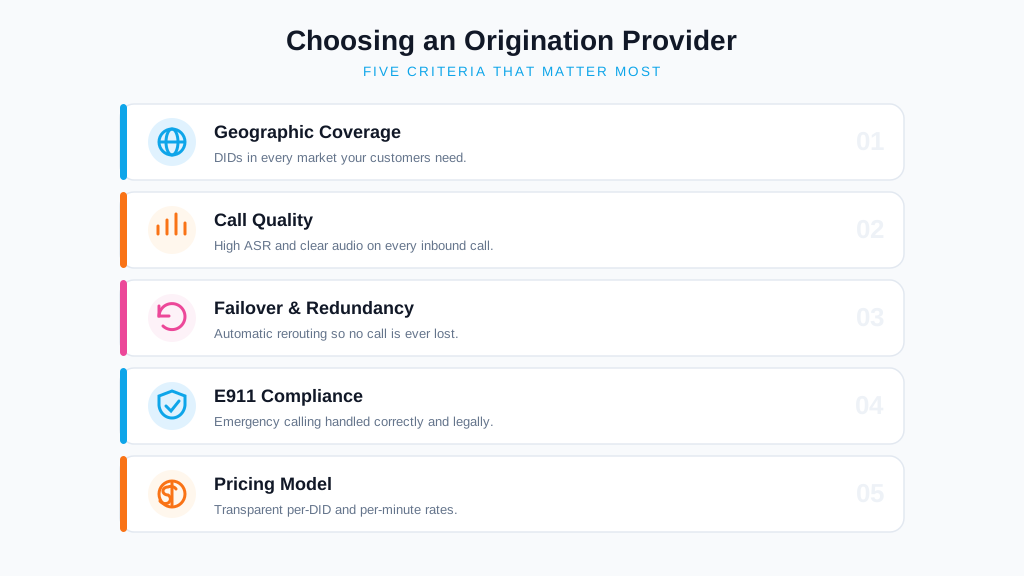
The origination provider you choose affects every inbound call your customers make. Evaluate these key criteria before deciding.
Geographic Coverage and Number Availability
Origination providers offer DIDs in specific countries, states, and area codes. Confirm they have numbers in the geographic areas you need — including any niche regions or area codes important to your customers.
Call Quality and Uptime
Origination quality is measured the same way as termination: audio clarity, post-dial delay, and call completion rates. A provider with strong PSTN connections in your target regions delivers better quality. Look for a published uptime commitment, how outages are measured, and what credit you receive if it is missed.
Failover and Redundancy
Providers with multiple redundant data centers and automatic failover protect you from outages. If the primary path fails, calls should reroute through a backup without any interruption. For businesses that depend on inbound calls, this redundancy is essential.
Emergency Services (E911) Compliance
In the United States, VoIP origination providers must support Enhanced 911 (E911) services. This routes emergency calls to the correct public safety answering point based on the registered address. Always verify E911 compliance before deploying numbers for US-based users.
Pricing and Billing Model
Origination is typically priced as a monthly DID fee plus a per-minute inbound charge. Rates vary by country and region. When comparing providers, calculate the total cost — monthly DID fees multiplied by your number count, plus your expected inbound call volume.
Wholesale Origination for Resellers and Operators
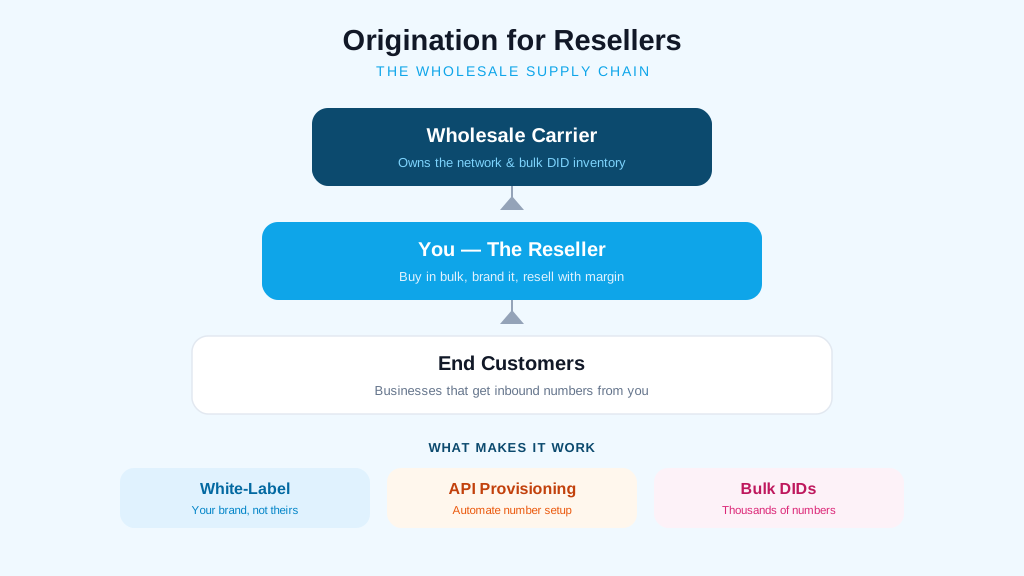
VoIP resellers and operators that want to offer phone numbers to their own customers need wholesale origination capacity. Instead of buying individual DIDs, they purchase blocks of numbers at wholesale rates and resell them with a markup.
White-Label Origination
Some origination providers offer white-label services — infrastructure that resellers can brand as their own. This lets a VoIP provider offer local numbers in hundreds of cities without building their own carrier connections in each location.
API-Driven Number Management
Modern wholesale origination providers offer APIs for managing DID numbers programmatically. This enables automated workflows. When a new customer signs up, the system provisions a local number in their preferred area code — and the number is live within seconds.
Local vs Toll-Free Numbers for Inbound Traffic
Inbound platforms typically provision two kinds of DIDs, and the right mix depends on how callers perceive and reach the business behind each number.
- Local numbers carry a geographic area code, signal community presence, and suit businesses that serve defined regions or want higher answer rates from local callers.
- Toll-free numbers are free for the caller, work identically from anywhere in the country, and suit national support lines, advertising campaigns, and brands that want a single memorable contact point.
- Billing differs — toll-free inbound minutes are charged to the number owner, so high-volume inbound operations should model expected traffic before choosing.
- Many operations run both: local numbers for regional sales presence, a toll-free number for national support.
From a routing perspective the two behave the same once the call reaches the SIP trunk — the difference is entirely in caller perception, reachability, and who pays for the inbound leg. For more, see Enhanced 911 (E911).
Capacity Planning for Inbound Call Volume
Inbound capacity is measured in concurrent call paths, not in the number of DIDs owned. A single heavily advertised number can generate far more simultaneous calls than a thousand quiet ones, so planning starts with traffic patterns rather than number counts.
The key figures to establish are busy-hour concurrent calls (the peak number of simultaneous conversations), calls per second during spikes (relevant for campaigns, broadcasts, or on-air mentions that trigger sudden surges), and average call duration (longer calls hold channels open and raise concurrency for the same call count). Trunks and downstream phone systems should be provisioned against peak values with headroom, because callers who hit a capacity ceiling hear busy signals or dead air — the worst possible first impression.
Providers differ in how they handle overflow: some queue, some reject, some allow burst capacity above the committed level. Understanding which behaviour applies before a marketing campaign launches prevents an avoidable flood of failed calls.
Porting Numbers Into an Inbound Platform
Businesses rarely start from a blank slate — established numbers carry brand equity and appear on signage, contracts, and search listings. Porting brings those numbers onto a new inbound platform without changing what customers dial.
- 1Gather account details — the losing carrier's account number, authorised contact name, and service address must match its records exactly; mismatches are the top cause of rejected ports.
- 2Submit the port order with a Letter of Authorization signed by the account holder.
- 3Keep the old service active — cancelling before the port completes can forfeit the number entirely.
- 4Pre-configure routing on the new platform so calls flow correctly the moment the port activates.
- 5Verify after activation — place test calls, confirm caller ID and E911 records, and only then cancel the old account.
Coordinating the activation window for a low-traffic period keeps any brief transition invisible to callers.
Securing Inbound SIP Infrastructure
Inbound trunks are internet-facing by nature, which makes them a target for scanning, spoofed signalling, and denial-of-service attempts. A few configuration disciplines close most of the attack surface.
- Restrict signalling sources — accept SIP traffic only from the provider's published IP ranges and drop everything else at the firewall or session border controller.
- Encrypt where supported — TLS for signalling and SRTP for media prevent eavesdropping on call setup and audio.
- Separate trunks by function — isolating inbound production traffic from testing or outbound trunks limits the blast radius of any compromise.
- Monitor for anomalies — sudden bursts of short-duration inbound calls can indicate probing or an attempt to overwhelm capacity.
- Keep session border controllers and PBX software patched — known VoIP platform vulnerabilities are actively scanned for within days of disclosure.
Security reviews belong in the onboarding checklist, not the post-incident report — retrofitting these controls after an attack is always costlier.
Troubleshooting Common Inbound Call Problems
When inbound calls misbehave, the fault can sit with the caller's network, the provider, or the receiving platform. A structured diagnosis narrows it down quickly.
Calls that never arrive usually trace to routing configuration — a DID pointed at the wrong endpoint, a failed SIP registration, or a firewall silently dropping INVITEs. Calls that connect with no audio are classically a NAT or firewall issue blocking the media stream even though signalling succeeded. One-way audio points the same direction, but only on one leg.
Delayed ringing suggests long lookup chains or slow failover attempts upstream, and calls that drop at a consistent duration often indicate a session timer mismatch between platforms.
The universal first step is capturing a SIP trace for a failing call and comparing it against a working one — most providers will do this jointly, and the trace almost always identifies which side of the interconnect owns the fix.
Conclusion
Wholesale VoIP origination is the foundational layer that makes inbound calling work for VoIP businesses. Whether you are sourcing origination for your own operations or building a service on top of it, understanding how it works helps you make better decisions about provider selection, redundancy, and cost.
Your origination provider directly shapes the experience of every customer who calls your business. Focus on uptime, geographic coverage, and technical support to get the reliability that inbound-dependent operations need.
Ready to get started with Wholesale VoIP origination?
Join thousands of businesses using MeraTalk for Wholesale Voice, VoIP, and phone number services.
Contact MeraTalk Today